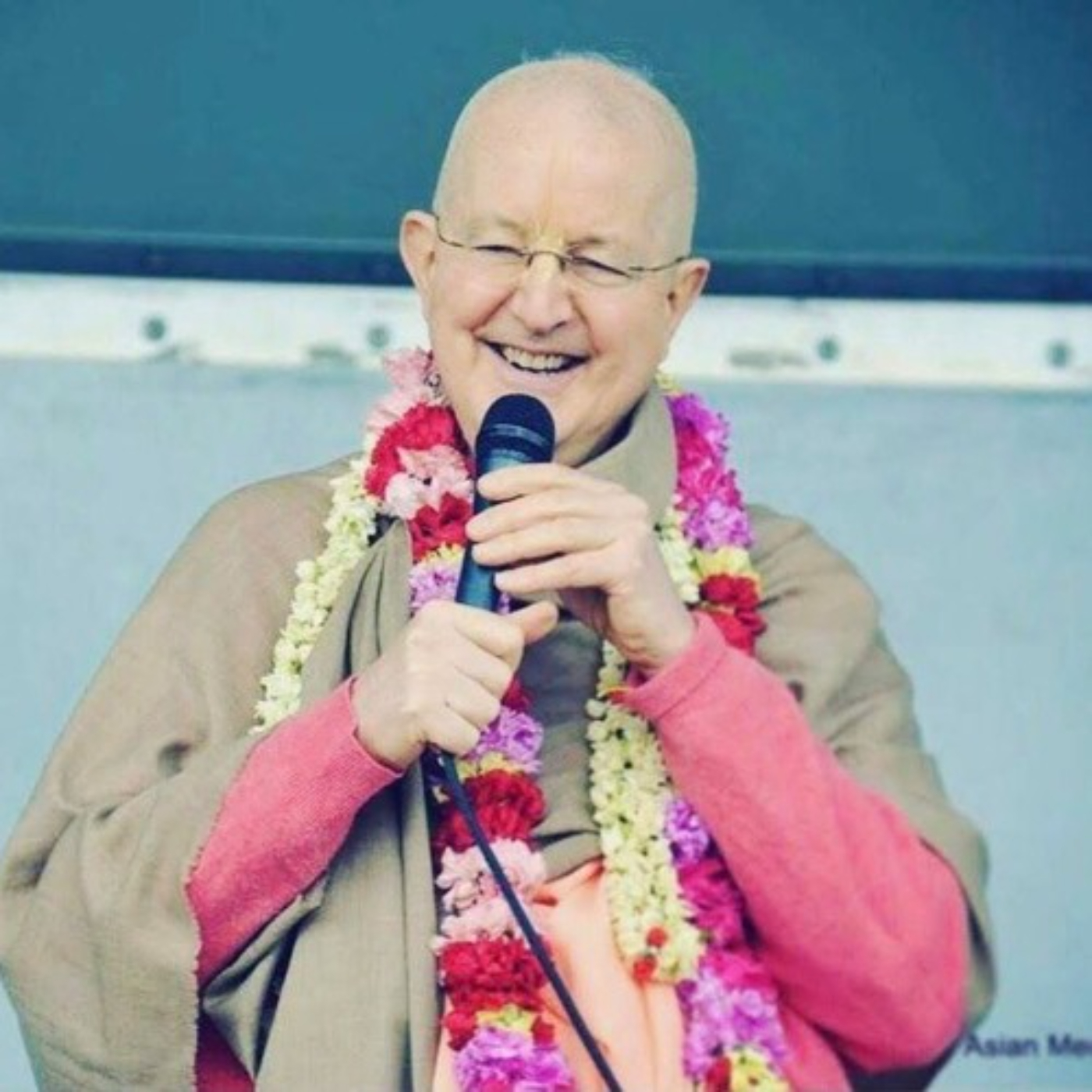
Ajaita Shah: Advancing Opportunity and Dignity for Rural Women in India
Founder and CEO of Frontier Markets, Ajaita Shah is a visionary entrepreneur, philanthropist, and impact investor with over 22 years of experience driving systemic change to empower 1 million women entrepreneurs and unlock $1 billion in e-commerce by 2030 across rural India.


About The Episode
Join us on The Founder Spirit podcast with Ajaita Shah as we unlock the transformative power of entrepreneurship and impact in rural India through the remarkable story of Frontier Markets.
Discover how one woman’s journey from New York City as an eighth member of a jewelry dynasty to leading India’s largest rural e-commerce platform is reshaping lives, empowering 40,000 women, and unlocking millions of dollars in rural commerce. This episode reveals the unfiltered challenges, bold innovations, and deep human stories behind building sustainable change at scale.
Ajaita shares the core principles guiding her mission—dignity, inclusivity, and impact—highlighting how technology, strategic partnerships, and unwavering purpose drive her vision to empower one million women entrepreneurs by 2030. Her lessons on resilience, leadership, and building trust—especially as a female founder in patriarchal India—are invaluable for aspiring social entrepreneurs, impact investors, and anyone committed to creating a legacy of lasting change.
How did an eighth-generation member of a jeweler family in New York City come to serve the poor & build prosperity for rural women in India? TUNE IN to this conversation & find out. Don't forget to subscribe and support us on Patreon!
Biography
Ajaita Shah is a visionary entrepreneur, philanthropist, and impact investor with over 22 years of experience driving systemic change across rural India. As Founder and CEO of Frontier Markets, she has pioneered a model that empowers over 40,000 rural women entrepreneurs (Sahelis) through AI-enabled mobile technology, delivering essential goods and services to 4.3 million people across 5,000+ villages.
A global leader in gender inclusion and impact investing, Ajaita’s “She Leads Bharat” initiative transforms women into digital agents of change—unlocking economic opportunity, climate resilience, and rural prosperity.
Her leadership has earned global recognition, including Fortune’s Most Powerful Women in Business (2025), Schwab Social Entrepreneur of the Year (2024), and CNBC Women Entrepreneur of the Year, among others. She also serves as the first South Asia Advocate for UNCTAD’s eTrade for Women and speaks regularly at global platforms such as the World Economic Forum and the UN SDG Summit.
Ajaita’s vision is to empower 1 million women entrepreneurs by 2030, impacting 50 million households and unlocking $1 billion in rural commerce. Recently honored by Prime Minister Narendra Modi for her transformative work, she continues to redefine legacy—building prosperity with dignity through innovation, technology, and purpose-driven enterprise.
Episode Transcript
[00:02] Jennifer Wu: Hi everyone, thanks for listening to The Founder Spirit podcast. I'm your host, Jennifer Wu. In this podcast series, I interview exceptional individuals from all over the world with the Founder Spirit, ranging from social entrepreneurs, tech founders, to philanthropists, elite athletes and more. Together, we'll uncover not only how they managed to succeed in facing multiple challenges, but also who they are as people and their human story.
Our podcasts are shared freely with the public, and your generosity is highly appreciated as we decided to do away with corporate sponsorships a few years ago. Please consider supporting us on Patreon so we can continue creating meaningful episodes with inspiring guests - that is P-A-T-R-E-O-N.com/TheFounderSpirit.
As always, you can find us on Apple, Amazon and Spotify, as well as social media and our website at TheFounderSpirit.com.
“Investing in women is smart business, but also impactful.”
“It's changed me because we've been able to systemically change something that has been so messed up for so many decades, maybe two centuries.”
“I'm also more and more convinced that the world needs to see the power of who these women are.”
Joining us today is the relentless Ajaita Shah, Founder and CEO of Frontier Markets, India’s largest rural e-commerce platform, currently empowering over 40,000 rural women as digital entrepreneurs and serving 4.3 million people across more than 5,000 remote villages.
With over two decades of experience driving systemic change in rural India, Ajaita is a global leader in gender inclusion and impact investing with the “She Leads Bharat” initiative.
Founder and President of Frontier Innovations Foundation, her vision is to empower 1 million women entrepreneurs by 2030, impacting 50 million households and unlocking $1 billion in rural commerce.
The reason why she is on the show today is because not only did I meet Ajaita two years ago, but I was almost immediately captivated by her passion, eloquence, and keen perception.
Just how did Ajaita, who grew up as (an eighth-generation) member of a jeweler family in New York City, come to serve the poor & build prosperity for rural women in India? Well, let’s talk to her & find out.
Hello Ajaita, welcome to the Founder Spirit podcast and thank you for joining us today from the Pink City in India.
[02:52] Ajaita Shah: Thank you so much for having me.
[02:54] Jennifer: Growing up in New York, what were some of the key influences in your life?
[02:58] Ajaita: I think that one of the biggest influences in my life will always be my dad. He named me - so my name is Ajaita - Ajaita means undefeatable.
50 years ago, he was the seventh-generation youngest that decided to shake things up and be an entrepreneur. And (that) really upset my grandfather, to be very honest. My mom… and the two of them colluded and disrupted.
And so they were the classic story - penniless, impoverished, didn't have any sort of access, moved to Queens. So he was my biggest influencer, I would say, for sure. Someone that understood entrepreneurship, risk, and still owning dignity and family and values and lives in a certain way.
Of course, my mom is the other - she is such a powerhouse. And my mom was a princess from where she came from, and today is the most incredible cook I've ever met in my life. Food wise, love wise, and everything.
Third, I would say, is my professor from Tufts University, where, you know, it's one thing to be thinking about wanting to do things, and it's another thing to get the opportunity to make it happen.
And I think Sherman Teichman was the person that actually drove me to think about taking risks. And I will never forget this one moment because I was graduating from college, recruited by CIA in a really weird way, but then also thinking about India versus being a lawyer.
And he was the guy that said to me, Ajaita, there's two lives - one is status quo and one is game changing. You can always come back to status quo, which is New York, lawyer, maybe even CIA, I don't know.
But the game changing was the risk to take to come to India. And he was my first backer and the first person that always made me be okay with semi-lying about where I am and what I'm doing so my parents didn't flip out.
[05:06] Jennifer: You come from a country and a family rich in jewelry making tradition, serving the maharajas over the last 500 years. You had started already working in microfinance in your senior year of college at Tufts, and then immediately after you graduated, you moved to India.
Microfinance is a category of financial services, including small loans and savings accounts and insurance, designed specifically to serve the poor rural population who otherwise would lack access to traditional banking.
I know your college professor must’ve had a big impact on you, but there are many ways to change the world, but why serve the poor?
[05:50] Ajaita: It's a part of the upbringing of being a child in the 1980s. So I'm a big fan of history and politics and policy.
So in the 80s, I was watching post-Cold War, I was watching Iran, Iraq. And none of us knew what that meant. But then in the 90s, we were watching Sierra Leone, Kosovo, Bosnia, all the things. And again, none of us truly understood it.
But growing up as a kid, I saw us Americans as saviors of the world. The world needed our help - UN multilateralism. Now how does it cut short?
I was 17 years old when 911 happened. And all of a sudden, you're seeing America attacked in a different way. And for me, none of it made sense. Why would someone decide to sacrifice their life out of such anger? And who was it that was convincing them that they should have a better life afterwards? This is what jihad was.
And that's the first time I think I started thinking about equity, inequity, prosperity and poverty. And I think that was that moment where I said, well, how horrible can someone else's life be such that they're willing to sacrifice it?
So when I went to college, I got a chance to dig deeper - politics of fear, politics of prosperity, politics of greed.
And I recognized that fundamentally, if we want to live in a world where we never have to worry about losing people because of, let's just say, a lack of understanding of how the world works, we have to recognize that we're tiny, the world is much larger. And in this larger world, you're talking about 7 billion people that are fundamentally not equal.
So how did I get to India? I had this amazing mentor. Her name is Dr. Ayesha Siddiqa, and she inspired me so much to go own your understanding of what does it take for you to become a true leader.
It's people, it's politics, it's perception, but it's also culture, history, and identity. And she was like, why are you not recognizing that this is the connection when you speak the language, you understand the culture.
What triggered me was I wanted to ensure that I have a role to play (so) that more 911s don't happen. So microfinance, Tufts University, we have some amazing people - Pierre Omidyar, (founder of) eBay, we have Vikram Akula, SKS Microfinance. And I said, let's try it.
Honestly, Jen, it was supposed to be a 10-month experiment. Lied to my parents. And I was like, but I'll look great, I’ll get into the best law schools. But it changed my life. I realized how complicated these issues are - politics, policy, people and thing - and it's complicated.
What inspired me to stay back into microfinance was that I thought the model was brilliant - give women money, they'll change lives around them. And they did, I saw it. I worked across 10 states of India, across 20,000 villages, working with 30 million women.
Even though they were diverse, what I saw that really hit me to my core was understanding that their life is hard - it's hard. They were married at the age of 14. I don't know how we can all process this - 14-year old women getting married when they were otherwise children, and then getting an opportunity to get access to finance, to build their businesses.
What do they do when they earn their money? They focus on building the futures of their daughters or their children or their communities. You can't undo that experience. And I saw the gaps and we'll get into that. But like, that's how the journey happened.
I believe social business as microfinance was smart beyond belief. I will always give credit to Muhammad Yunus. He is the brilliance of what made it happen. I was so lucky to learn under him, under Samit Ghosh. They helped me understand what it means to build business, purpose and opportunity.
[10:27] Jennifer: About 15 years ago, you founded Frontier Markets in 2012. Ajaita, do you recall a decisive moment where you felt called to build your own venture?
And at that time you've only worked, I guess, 5-6 years in the field. I don't want to diminish that by saying 5-6 years. But I wanted to just better understand the moment where you felt, okay, this is what I'm going to do regardless that I'm young, that I'm only 26, coming from America. Was there such a moment? Please tell us.
[10:59] Ajaita: Yeah, I was very lucky to have the experience that I did, to your point, my five years for any other normal person would have been 25 (years).
It was really intense and I had the opportunity, but also shock reality. You know, when I say in-depth, I mean in depth. Like I was living in these villages, staying at people's homes, watching and witnessing what I thought was idiocy.
Because why should someone not have access to electricity? Why should someone not have access to finance? Why are they not being seen? They feed the country.
And why are we not understanding the power of these women versus us always talking about why they are poor and we need to help them. And this is where I just learned so much in that time intensely, physically with them.
When I was in microfinance, I had an interesting job. So I wasn't just talking about giving people loans. I was talking about thinking about all the other reasons why a financial product is not enough. You have to think about the vulnerabilities.
If someone wants to buy, for example, a sewing machine and they got a loan. If they don't have electrification because they only can work that sewing machine at night and there's no light bulb, they're not going to be effective.
If their husband suddenly goes through some sort of health crisis, they're done. There's so many levels of vulnerabilities that I was looking at that time.
But I also understood where the gaps were. The gap was supply chain, the gap was truly understanding the needs of people. Because if you're product-centric, you're obviously going to push a solution. And I went through failures and successes.
And what triggered me to make Frontier Markets? To answer your question, I will never forget this story in my life.
I was in a very small village in an area of Karnataka, south India, where I was meeting the village leaders at night. And it was dark.
So we're having a conversation. All of a sudden I am hearing shrieks and yells in this insane way, like banshee style, and to the level where I'm like, oh, my God, what is going on?
Now these guys, they get up, they're running. I don't know where I'm going, there's no lights in that village. And I'm running. I fell four times. What is this story?
There is this widow who has a small child and she lives in a really small shack, and her child wanted water. And because you're a widow, you don't have a community around you.
So she's like, I can't hold my child, it's dark, I can't see anything, and I can't also get the bucket back. So she was like, I'm gonna leave the child with the kerosene light so that he has light so he doesn't feel like he's alone.
Seriously, like, four years old. And she's like, less than 10 minutes. Within that moment, the child, not knowing where his mom is, was upset, did whatever he had to hit the kerosene light. And because she lives in a shedded shack.
Burnt - child died, home died. She lost everything, she lost everything, Jen, within minutes. Okay, that's what we're watching now.
Why did I set up Frontier Markets is because when those elders were looking at this, I'm horrified, mortified in every level, shape and form. They go, she's an idiot - she was better off letting the child sit in darkness.
Like, when you start thinking about this, you're like, wait, what? What? I just got so angry. That was my first time I got so angry.
And I remember getting back to Hyderabad and all of us young kids in our 20s, to your point, we're sitting in this place called Mocha. It's like our fun coffee place. And I was just so angry.
And you know what my friend said to me? They said, Ajaita, you know how to fix this. I was like, what do you mean, how do I fix this? I have no money. I have no power. Like, what are you talking about? And they're like, yes, you do - you have a lot of power; sure, you have no money.
And I remember calling my dad, and I said to him, I fundamentally believe things that are happening are wrong, and I believe I can change it, but I'm not sure.
And he said to me, and I'll quote him, he said, when you put your efforts into something, they become gold. So if this is what you want to do, do it. I was like, yeah, but I have no, like. And he's like, yes, you do. That was it.
[16:16] Jennifer: That's beautiful. All I have to say is that it reminds me of our mutual friend Karen (Tse), when she was working in Cambodia, just post-the Khmer regime, and it was really difficult. She was trying to set up the legal system there, and she was getting very frustrated.
So she would visit the monks. One Buddhist monk told her, whatever you focus on will grow. So I feel like it's a very similar…
[16:32] Ajaita: It is. And I think, to your point, I've gone through so many insane hurdles in my journey of 21 years - car accidents, horrible people, crazy politics, policy, things. So many, many, many, many things.
I think the reason why I am still standing and why I've been able to do what I'm doing is because of spirituality. I really do believe it. I'm not talking about one religion. And I think we are all connected for a reason because we want to do important things, but we also need to have our allies and our energy connection.
[17:18] Jennifer: Lovely. I also wanted to ask you that at some point in your career, you found yourself as a single female founder.
And so what was it like fundraising and running a social-conscious enterprise in a predominantly patriarchal society?
[17:37] Ajaita: For me it's patriarchy, it's age. And then of course it's also cultural clashes.
Early on, I think I was told that it was important to have a counterpart to… Because as a woman founder, what are the key questions that everyone asks you? Like how old are you? Are you married? When are you planning to have kids? What is your situation?
You have an American accent - I don't understand - how do you want to be the one that drives this vision of changing rural India? None of this makes sense. Where are your parents? What's your plan?
And then the third obvious one was, are you a single founder? Oh, it's just you - just you. Let's be very clear, (the) world is listening to this, I'm enough, I know this. But at that time, you're young and scared and you have no idea. And so yeah, I made a lot of mistakes.
You can come in with your own experiences and want to feel confident and want to feel like you're going to take over the world because you can. But the world creates a lot of insecurities for you, in a really big way.
[18:54] Jennifer: It's a test.
[18:55] Ajaita: It's a test.
And of course I've made bad decisions and I know I have. I brought in a founder or a co-founder because back then, I had no idea. I didn't even understand what it means - what is the difference between being a CEO versus a founder? Because the world will not know that your co-founder is not equal.
And then (the) second element of that is an understanding that when you're young and you have an American accent, like I will never forget the first time I was in front of the judges to win the award. They were like, Ajaita, please talk about your background before you talk about your story, your pitch of Frontier Markets.
We need to know your background. Because no one could imagine this American girl who is having this accent, who is pitching on wanting to change rural India. It was an interesting moment - all men in the room. I'm that girl.
Jen, every place in my life for the last 21 years, I'm always that girl in the room. I'm the only girl in that room. Imagine there was a Vogue article that came out that I participated in where they're like, you must be angry now. I was like, I'm not.
Now I know how to step up and go, dude, I'm the CEO. Hi, shake my hand, irrespective of the two guys beside me. But in India, it's different because you have to then deal with government, and you have to deal with a lot of different cultural things.
The best quote I got today, she's my godmother, and she's built the most incredible thing in India in terms of healthcare. She said to me, she said, just come in with dignity, pride, and also understand how to change yourself. You have to change yourself.
You cannot walk into this room getting angry by the systems that are problematic. You did not create them, but you're part of it. How do you deal with it? You have a choice to make. You can come in with your own anger. And I did, trust me, I did. I was so angry for so long in so many ways.
But ultimately, I learned that there are battles, and then there's the war, right? So the war… I'm winning the war. That's where it comes down to.
[21:25] Jennifer: Also like you, I think at some point I was really angry, but I made a conscious decision. I allowed myself to be angry for a while.
And then I've also promised myself during the struggle, I said, you know what? One day I will harness this anger and I'll make it something good.
[21:46] Ajaita: Something thoughtful. Something productive. Exactly.
And I think one of the reasons why I've been more and more entrepreneurial in how I deal with things is because I've been able to take the learnings of my anger and harness that in a different way. So I started changing myself.
I'm the first to accept all the mistakes I've made, all the scary points that I've had, like Covid, demonetization. And I love that everyone assumes that you, as a social entrepreneur, has the answer. No you don't, but everyone expects you to have the answer. And then you're kind of scared beyond belief, because of all these responsibilities.
Today, if I have 310 staff and 40,000 women entrepreneurs and all the numbers that you've already said, please understand this was so hard.
Like demonetization in India - I still remember it. And this is my favorite story. I'm watching Trump win the election, Hillary losing, and all of a sudden Modi decides to declare demonetization.
None of us knew what that meant. None of us had a clue. I'm working in rural villages so I'm sitting there going, wait, what's about to happen? Please understand rural women, rural people were putting cash under their mattresses. And no one knew how that movement was going to happen - scared as hell.
And so I was like, I need to shut down. I need to, like, zen out, process. Yeah, but the next day, of course I did. I was the reason why JIO and all these things happen. I was the reason why the tech came in the way it did. I did a lot of things.
Covid. First phase of COVID when we were in a lockdown in the country, for rural India, it wasn't healthcare, it was access. Because you were in essentially a lockdown. But because we were already tech-oriented, I was able to get the data of all of our women and our teams, etc.
And I was like, I have 2,000 villages, I have these many millions of people that literally cannot even get rice to their houses. They can't go to the bank, because you're locked down.
So if you would like, I can fix this. They're like, what do you have in mind? I was one of the first organizations in this country that was open within a week of the lockdown, where no one else.
They're like, what do you need? I said, give me the essential services things. But imagine what that meant. I had to make 310 people become digitally-oriented, become Covid-friendly thinking through like your supply chain. It's why I'm so grateful for my team.
So I was having a call just earlier today where someone said, are you business or are you impact? I said, why don't you understand that you can do both in a really important way?
That was Covid 1. Covid 2 was health care because it was. If you guys remember, at that time, no one was getting the vaccinations unless you're above 45 years old in India,
My mom was freaking out and she was like, can you just get your butt to America? Are you forgetting you're an American citizen? And I can't tell you how nostalgic, but also, scary that was.
I cried, I cried a lot about getting back home. I was a soldier that had to deal with so many elements of so many things, sitting in my apartment and trying to make this thing work.
Got to America - very easily, got vaccinated in a way that I knew that no one else was getting vaccinated. And I cried. And then when I knew that it was going to be about rural India, I called all my competitors. And these guys love me because I love them.
I'm Mama Shah on my own level, where I was like, all right, hey, guys. you all went through the same stuff that I did. They were working in Andhra Pradesh, Karnataka, we were in North India.
I was like, what if we coincide? And we built the largest rural coalition for access for health care in the country. Never happened, but five competitors came together because I was on the helm of making it happen.
That's why we won the Schwab, the other World Economic Forum award.
[26:28] Jennifer: Yeah, the Schwab Foundation for Social Entrepreneurship.
Ajaita, on the topic of fundraising, you have an impressive list of impact investors on your cap table. You somehow have managed to raise more non-dilutive CSR money for a for-profit organization than you have raised actually in terms of investment into the company in terms of equity and debt.
And you're the only person that I know that has done this. So I was wondering, how do you balance the interest of having investors in your cap table versus your own urge to build something to last?
Becoming profitable means that the entrepreneur now has the option to just keep on going, right? To keep the status quo and not raise more money and not look for (an) exit. So I want to explore that a little bit with you.
[27:22] Ajaita: So I want to break it down into three elements. Let's start with the second one, which is the equity and debt piece. We'll get into the CSR one in a second.
When I started Frontier Markets, there was no chance for VC investors and all this other stuff, like it didn't exist. So impact investors that came in, what was their thesis? Their thesis was, we were going to give you capital. We will have a 5-7-9-12 year horizon and we also care about the impact that we're creating now.
What they didn't say was that we expect you to do all these crazy reports and become our show pony in a certain way where they were using philanthropy in their own LP structure to essentially then create gains.
And what we didn't know at that time was that because we didn't understand valuations and all of these things, because we're so new into this space, we actually kind of gave up our soul in certain ways.
There are certain investors who came in at the right time and they did a brilliant job of giving us the opportunity to become what we are and how we are and where we are.
However, I think everyone has their own timelines. Now the timeline cannot be their exit - the timeline also has to be their value. And you need the right expertise, to support what's going on the ground.
And this is where I think the impact investing piece has become challenging for me because I ultimately, unfortunately started seeing these operational problems of all these funds because they have bureaucracies in a way that they don't control.
And I understand this - you're running a fund, you need to have your own exit strategies, etc. But if I'm bullied around that, I will make bad choices. I almost did - I made almost really bad choices where I almost sold our company at a time that it was not… that I knew the industry was like, what is wrong with you? Why are you selling this?
But I was, I was frustrated because I felt like he had this pressure to get these exits. And that doesn't mean that investors shouldn't make money. Obviously, we believe everyone should make money.
So that's one. So that's where the equity piece comes in my mind. And I have not raised equity for a while for a reason. Because one thing that Paula Mariwala taught me was build a business to run, don't build a business to just exit. And that's why our numbers and our cash flows and they are what they are.
But CSR side, I'll tell you, is really interesting and exciting because at the end of the day, I still believe philanthropy has a really important role to play in terms of de-risking and building and allowing those foundations to be created.
Philanthropy is actually the one that doesn't want extraction, you're building to last. You're creating catalytic opportunities to build organizations for the next 20-30-50 years. And how do you create local foundational sustainability and access to unlock certain things?
So in India, as an example, we spend close to $4.2 billion of CSR grant philanthropy in the country. Now what is that purpose? And I think for me, the learning that I had was it's soft diplomacy and it's also an ability to be able to leverage to then unlock what is required.
$4.2 billion, in my mind, can unlock easily $45 trillion in other sectors of what we're calling different finance, different outcomes. But that is focused on this intentionality of having women have sustainable income elevation that enables them to unlock (bankable) outcomes, etc, and build markets so that you move on.
So I, as a CSR funder, would have put in my $100 for that woman, but then I'm done. And because of my investment, that woman has unlocked $500-$1000, and it's getting rotated, which is where I think the hybrid (philanthropic & impact capital) is coming in. That is what we unlocked.
So we started seeing the pain points of these funders that basically were like, well, I want to see outcome, I want to see growth, but I'm frustrated because I don't know if I can trust that the organizations I'm working with will get the outcomes.
But I basically was like, look, that organization that was there from day one was meant to build a foundation that is very powerful, which is these women having even the courage of wanting to be entrepreneurs or wanting to unlock their money. I'm not doing that, they did. So you have to understand that we're building off of that foundation. So if that's your shift, and that's where I think CSR is important.
And then in terms of extraction versus philanthropy, this is why I'm so excited about No-End (Philosophy), and this is why I'm excited for about what you're building as a platform.
Because I do think that there is an opportunity for all of us to think about what the future holds. Frontier Markets is going to go IPO, next three years. Why is IPO important? IPO is important because it enables us to continue our work. Yes, you create exits and opportunities for shareholders, but you continue your work. And then we'll go to Africa and then we'll go to Asia and then we'll go to everywhere else we need to.
Dividends are good enough. Extraction, in my mind, is what throws off so many elements of how a social entrepreneur should think about things.
[33:18] Jennifer: So as mentioned, Frontier (Markets) is India's largest e-commerce platform, enabling last-mile market access powered by technology and women.
You are essentially unlocking this critical last mile market access for rural customers through your digital savvy, rural women entrepreneurs, which I'm sure that you had to train very diligently.
And what really struck me browsing through your website was your corporate value. They’re dignity, they’re inclusivity with the gender lens, sustainability and shared values, all of which you have already talked about on the show.
But I was wondering, now you have a team of 40,000 women, rural women as the digital entrepreneurs that's delivering your products and services, how do you ensure that you build a corporate culture based on these values with such crazy growth right now in your company?
[34:14] Ajaita: Yeah, I have some joy in saying that I'm just the face now or the voice now.
But actually our senior leadership team that is with me is about 15 people, each of them coming with their own incredible, unique experiences of at least 20 years of working in rural India. And when we came together and we designed our process, our value system is what was the most important element of this.
So every field staff to every Saheli, like Jen, to be very clear, I created the first 250. We're at 40,000 now. And so when I go into any of these villages, they know my story, they know who I am, they know our ethos. The field staff know their ethos.
Imagine men serving women chai. And it's not because I'm there, it's because of what it is. So that's one.
But to your point, in terms of culture and process of scale, of where it's going, because we are now in five states, I think our technology has been the game changer. We have seriously the most amazing state-of-the-art technology that was designed with, for, by women, AI-enabled vernacular, today in Gujarati, Hindi, Telugu, English, Marathi, - five languages.
And I'll add the third element is we're pretty good at what we do. And it's become a repeatable scalable process for the country that we're sitting in. The SAG network that we tap into is 100 million women, and we've been able to build that reputation with the government. It's a pretty cookie-cutter model that allows us to scale.
Where our verticals are, I would say one is (to) bring CSR to go into a new state. Because the first six months you do have to find the right woman, now easier than ever, build her capacity, unlock her confidence and then build that e-commerce piece. But we've been able to do this now quite well.
We have a contract now with the Andhra Pradesh government where we will literally create 100,000 women entrepreneurs just in their state. And in Gujarat, I'm going next week to create another 100,000.
[36:41] Jennifer: Great. And now I want to shift a little bit on the impact side of things. I recently listened to two of your fireside chats between one of your brand partners which is Microsoft and Artha Impact and the two Sahelis, which means girlfriend in Hindu.
So what really stood out to me was how much impact that you had on these women. I think we're often looking at metrics that are data-oriented and overlook some of the soft metrics.
But by increasing the average income of these women from $2 a month to $50 a month after a year, which is incredible. It's a 25X. So with that, not only are you pulling them out of poverty, but you're also upholding their dignity.
These women are like, hey, I matter, I'm now a pillar in my village, people look up to me. This is something that I've also experienced with other non-for-profits. As mentioned, I sit on the board of Global Fund for Widows - that was my episode one, Heather Ibrahim-Leathers.
And so when you talk to these women, yes, when you look at the numbers, it's a 5x lift in terms of their income, household income from year one, year two. But actually what soul, which is they become confident, they know that people care, that they matter to society.
So these are beautiful stories to hear about. But my question is, in what way did working with these rural women change you over the course of your journey?
[38:33] Ajaita: It's kind of a full-circle story around the fact that I got married, I had an arranged marriage.
[38:39] Jennifer: You're an enigma, Ajaita. I could never… (chuckles)
By the way, I also want to mention I talked to one of your early investors and it is a she. She did tell me that she pulled a term sheet when she learned that you were engaged.
[38:58] Ajaita: Yeah, getting engaged. And the story behind that is that I remember after everything I did in microfinance, I won a lot of awards, my mom was just not happy.
And I remember looking at her being like, I could become the president of the world, but if I'm not married, I've not done my job as your daughter. And my mom, honestly speaking, said, damn straight. And I was like, wow.
So I went down the journey that I did. When I divorced at 29, it was the same year I won “Forbes 30 under 30.” And I remember my mom being so upset about the idea. Of course, I was the first girl to ever get divorced in our society.
But I remember telling her this - I said, I'm self-reliant. But also, more importantly, I also remember telling her, when you go into society, walk in with your head held high, because your daughter, who I am, is going to change the world.
And I think about that and I think about that connection with these women. Their stories are phenomenal. When they say, before you I was known as my father's daughter, I was known as my husband's wife; but because of you, now I'm known as me and I make the decisions.
When we think about patriarchy in Rajasthan, these women have helped 200,000 daughters, 200,000 daughters not get married at the age of 14. They're using their money to invest in their futures.
These girls at 17 are actually having the opportunity to say they want to become the next police officer or they want to become the next…And I, when I hear it and then I look at their mom and I go, did you ever imagine?
It's changed me because we've been able to systemically change something that has been so messed up for so many decades, maybe two centuries. But we've been able to change that - and that, to me, is powerful. And then when I meet them, I cry every time - I hang out with everyone, it gives me so much joy.
I'm more and more convinced I didn't make a mistake coming here. I'm more and more convinced that I have the power to make it happen. But I'm also more and more convinced that the world needs to see the power of who these women are.
[41:34] Jennifer: Beautiful, thank you so much. Ajaita.
I want to mention that Frontier Markets not only operate 20 warehouses, covering 5,000 villages with a delivery time of 48 hours, but you also have delivered 100 million solutions to rural doorsteps.
You have a phenomenal range of products and services on your platform ranging from financial services to clean energy solutions, climate/agricultural solutions as well as healthcare and home appliances and beauty.
You have a very impressive list of over 200 brand partnerships on your platform, just to mention a few - Microsoft, Samsung, Philips, P&G, Unilever, Airtel Payments Bank.
I think one of the things that I'm always really curious about in terms of talking to you, I know it's been a 15-year journey, but how did you manage to establish and grow all these partnerships with these brands?
[42:40] Ajaita: Look, I think if we take a step back and we look at this, like I said, rural India is a market. You can look at this as an impact story. You can look at this as a market.
And rural India today, if we look at some of the main partners that we have, whether it's digital banking services, whether it's CPG companies, FMCG, etc. The biggest consumers actually are rural India. It's just that they had an access problem. So 800 million people, and distribution, let's be honest, is expensive.
So no one particular company would be able to justify their profitability over that period of time, which is why you piggyback on certain things. We learn that very quickly.
And we are the biggest and we are at the furthest of where trust is important because some of these companies in terms of product categories are dealing with 100 other competitors.
So who we decide to choose is based on our access to our customer base. And that's why it happens.What's been fun for me has been breaking down those categories and understanding those companies.
But then also very gratefully, we have amazing partners. Mastercard Center for Inclusive Growth was the reason why we were able to bring in Airtel Payments Bank. EY was the reason why we got Unilever and P&G and others.
One fun anecdote I'll give in terms of that as an example is sanitary napkins. Imagine a rural woman who suddenly gets her period and she has to then tell her son to go to a garana (store), so the entire village learns that she has a period right now. And then ultimately that means she's not allowed to then sit with everyone. There's so many stigmas, or she doesn't say anything to anyone because of that stigma.
And we created a subscription sanitary napkin hygiene program such that the Sahelis were going, dude, I know you, so therefore you're needing your sanitary napkins in these like, no, don't ask, don't tell this type of situation. It changes so much.
So the P&Gs and the Unilevers and the Godridges and all of them, they're not just using us because they're selling their products, they're actually using us more for insights because they actually have zero access to insights.
When Unilever wants to understand why their Rin detergent is not selling as well as Ghadi, which is like the local brand, we are there.
[45:25] Jennifer: Yeah. And they also need the feedback on new products. The FMCG market, the margin is very thin.
[45:34 Ajaita: Super thin. So you can't build rural last-mile distribution just on an FMCG or even digital banking services or financial services. Let's be honest, the margins are horrible - it's 0.25% to 2%.
When you look at the 210 partners, we were able to show how we can, to your point, about insights, cheap distribution because we have the in-built system, (a) new customer base because they don't have it.
But we also were able to get what we needed, which was ultimately diversification. Because otherwise you can't build last-mile distribution at this cost, without the diversified revenue.
[46:13] Jennifer: Right, absolutely. I also wanted to mention that you have this vision with the She Leads Bharat initiative. Your vision is to empower a million women entrepreneurs in five years.
You're employing 40,000 women today. It's a 20x ambition. And you're giving yourself five years to accomplish that. So explain in a nutshell, how you're going to pull this off.
[46:38] Ajaita: I don't have to do a lot - tech is ready, it’s built for the six or seven states that we're working in. We've finally built our reputation to create credibility for the government to actually step up.
If you want to do systems change truly, you need government as well as markets as well as NGOs. You need to build it all together. We've been able to do that.
We are in Gujarat. We are in Rajasthan. We are in Uttar Pradesh. We are in Andhra Pradesh. And we are also in Maharashtra. Five states. Now for the audience, please understand, that represents literally more than half the population of this country.
And now, infrastructure wise, as we talked about earlier, honestly, it's not about the politics of the government. It's the policy. India created the National Rural Livelihood Mission a long time ago. It's been around for decades.
We have 100 million women that are part of this ecosystem right now. So when I'm saying a million, honestly, I'm like, sure, why not? Like. And the thing is that we are so grateful for the fact that people are seeing us now. They're seeing us. They understand our model. Yeah. We've signed some incredible partnerships with these states. All of them are asking us to create like 100,000 women entrepreneurs in their area.
Why can I do it faster is because faster than I have the 40,000. Let's be clear. 40,000 has been a learning journey. But the scale to get to a million is easier because we understand product-market fit, SOPs, technology, etc. But more importantly, reputation.
And then getting the right financing. I don't think this is crazy as an idea. It will happen.
[48:35] Jennifer: Excellent. Ajaita. I still have so many questions for you and I know that we can talk for hours and hours, but I'm going to make the rest of the questions rapid fire, which means you can only respond in a few words. So let's go.
[48:48] Ajaita: I'm ready. I'm ready.
[48:50] Jennifer: Great, Ajaita, on International Women's Day last year, you were one of seven women who took over Prime Minister Modi's social media account to mark the achievement of women in India.
So congratulations and I think it's more than well-deserved. Can you tell us what you posted on his social media account?
[49:09] Ajaita: I talked about his leadership and I talked about our work.
[49:13] Jennifer: And for that you've received a lot of media attention and coverage in India. How do you remain humble and stay grounded in navigating such public visibility?
[49:25] Ajaita: I was just say this in one word, like that's not fair.
[49:29] Jennifer: A few words.
[49:30] Ajaita: I was like, girl,
[49:33] Jennifer: That's it, you already said okay. I'm like
[49:35] Ajaita: Okay, I'm done with imposter syndrome. I recognize why we should be showcased.
My voice is not my voice, it's everyone else's voice. I understand my responsibility and therefore I take it with like a different lens of power because I'm representing other voices. That's what grounds me always.
I think about people that are my inspirations and who also equally have been grounded. So I keep learning, and I never want to lose that groundness
[50:10] Jennifer: And knowing what you know now, what would you do differently?
[50:14] Ajaita: Raise more money, for sure.
The challenge with women entrepreneurs is that we tend to always be pragmatic and practical and therefore only raise how much you need to build your solid business. I'm not saying it's wrong, but our counterparts have done a lot more.
I think that if I understood that better, I would have, in a heartbeat, brought in more money. That's probably the biggest one.
Second is I cannot tell you how much I was upset about not seeing demonetization. I should have seen it. I should have seen it coming. I just wish I would be on top of things more effectively.
But what it takes to be effectively on top of things is confidence in yourself, knowing your power, knowing your space, and knowing your access to capital to make it happen.
[51:14] Jennifer: What do you still hope to accomplish professionally? Would there be a chapter beyond Frontier Markets?
[51:22] Ajaita: Two words, global inspiration.
[51:25] Jennifer: Beautiful. And what would you like to be remembered for?
[51:28] Ajaita: Investing in women is smart business, but also impactful.
[51:32] Jennifer: What is our common goal or what should our common goal be?
[51:36] Ajaita: Coalition, creation and alignment. So we take our power to the next level.
[51:41] Jennifer: And known as the pink City. What is it like to live in Jaipur?
[51:47] Ajaita: It's the hub of culture and grounding of where I come from.
[51:52] Jennifer: If you did get recruited by the CIA, what would you be doing today? Would you be La Femme Nikita or a nerdy data analyst in the background?
[52:02] Ajaita: Obviously, La Femme Nikita. But my body would be very different. (chuckles) You know, I'm La Femme Nikita that has a nerd brain.
[52:12] Jennifer: For everyone who's listening, you can check out Frontier Markets online at www.frontiermkts.com - one word.
We're now coming to the end of our interview, and as you know, we end every episode with a quote. And for this episode, we have a Jain philosophical aphorism, commonly accepted as the motto of Jainism, one of the world’s oldest spiritual and philosophical traditions, originating in India over 2,500 years ago:
So this is where I test out my Sanskrit.
“Parasparo Pagraho Jīvānām” which loosely translates into “souls render service to one another” or “mutual support is the essence of life.”
It emphasizes the philosophy of nonviolence and ecological harmony, which the Jain ethics and doctrines are based. And I picked this also because it reminded me very much of a similar concept in Buddhism called interbeing, where everything and everyone is connected and interdependent, from the plants to the animals to the rocks to the water.
So thank you so much, Ajaita, for coming on the show today. And with that quote, I wish you all the best in continuing your journey of servant leadership and working with and for rural women in India.
And I wish one day that your father can bring all his diamonds (chuckles), and Shahluxe will become one of the brand partnerships that you have.
[53:58] Ajaita: Can I, can I give my own closing? You are, hands down, in my mind, maybe one of the coolest people I've met in a while because of your thoughtfulness, your passion, your dignity and your vision.
And I just have to say, it's just an honor to be a part of this podcast with you because I knew it was going to be fun. But also knowing you and what you're building and how you're thinking about constantly evolving our space of social innovation to become more effective, more seen, and also more action-oriented, frankly.
That's why I think this is the coolest podcast I've been a part of in a while. So thank you.
[54:48] Jennifer: Thank you so much, Ajaita. Thank you for joining us today.
Our podcasts are shared freely with the public, and your generosity is highly appreciated as we decided to do away with corporate sponsorships a few years ago. Please consider supporting us on Patreon so we can continue creating meaningful episodes with inspiring guests - that is P-A-T-R-E-O-N.com/TheFounderSpirit.
As always, you can find us on Apple, Amazon and Spotify, as well as social media and our website at TheFounderSpirit.com.
[55:25] END OF AUDIO
Show Notes
Takeaways:
- Building with purpose over exits fosters resilient, meaningful organizations
- Impact success is measured by dignity and social empowerment, not just income uplift
- Strategic patience coupled with radical adaptability unlocks exponential growth
- Authentic leadership hinges on vulnerability, humility, and continuous self-awareness
Personal Links:
- LinkedIn: https://www.linkedin.com/in/frontiermarkets/
- Instagram: https://www.instagram.com/ajaita/?hl=en
Organization & Social Media Links:
- Frontier Markets: https://www.frontiermkts.com/
- LinkedIn: https://www.linkedin.com/company/frontiermkts/
- Frontier Innovations: https://www.linkedin.com/company/frontier-innovations-foundation/