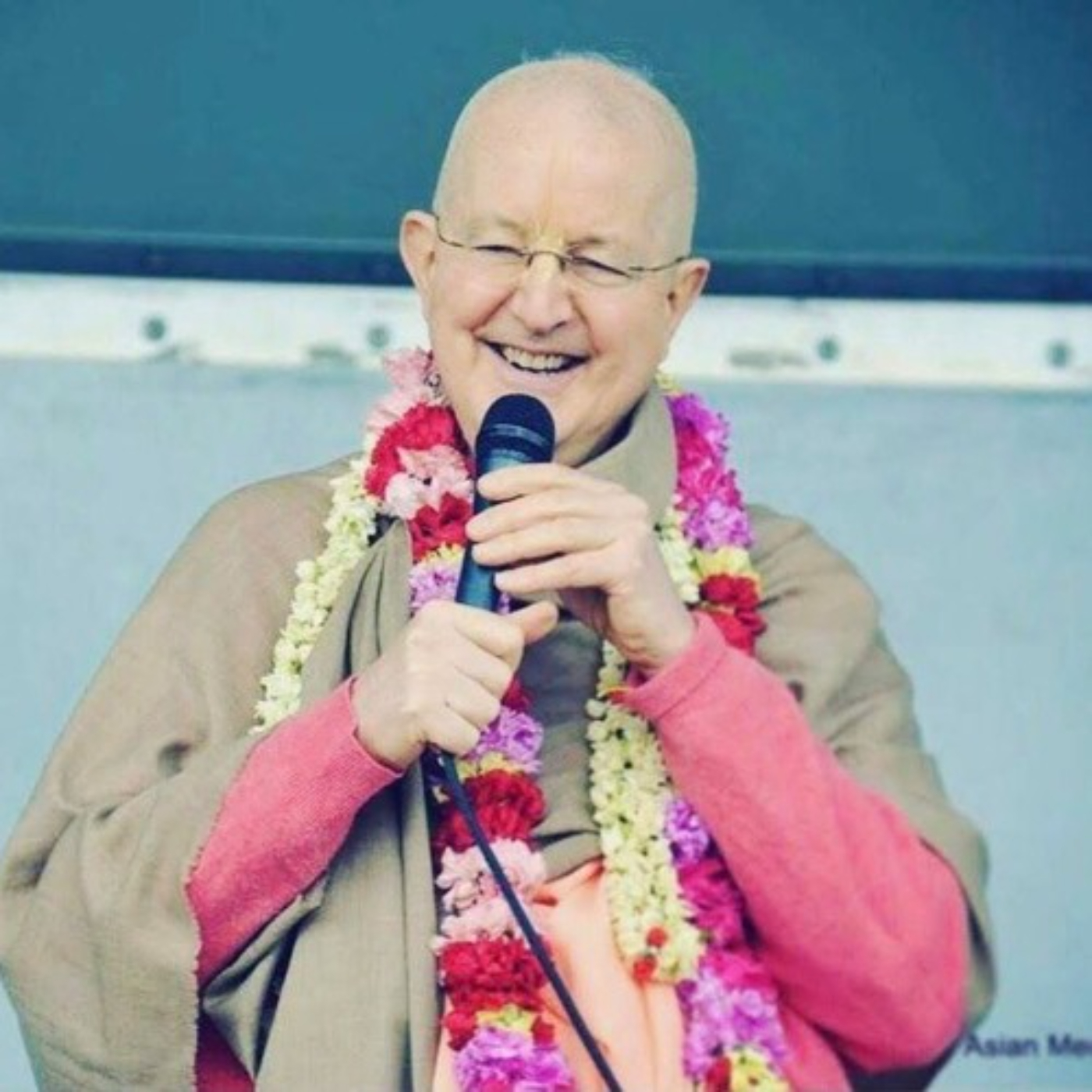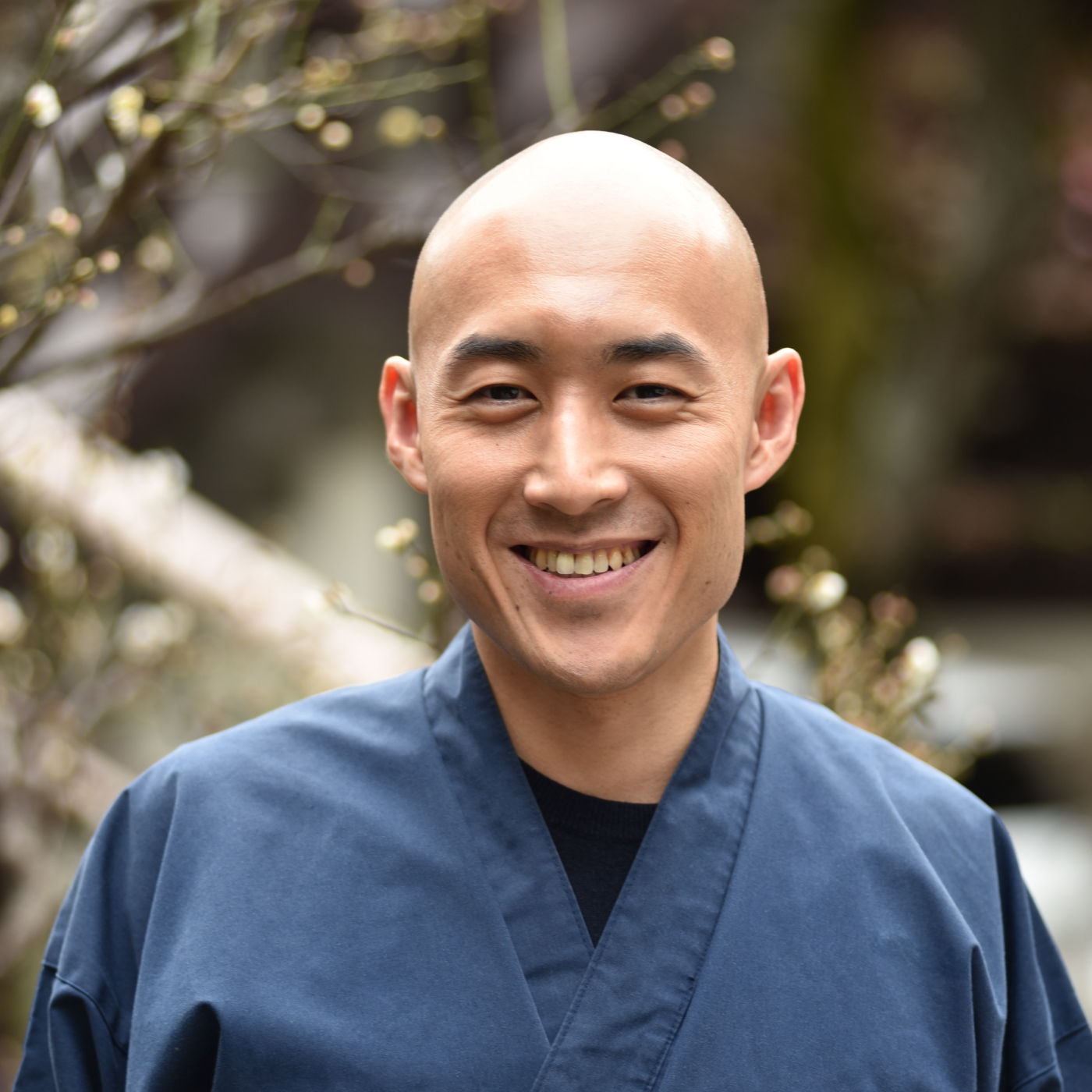
Interbeing with Shoukei Matsumoto, The Monk Entrepreneur, On Becoming Good Ancestors
Shoukei Matsumoto is a Buddhist Monk from Japan, Founder and CEO of Interbeing, a futurist, and author of several books, including the international bestseller A Monk's Guide to Clean a House and Mind, and most recently, Work Like a Monk: A Buddhist Guide to Embracing What Matters.


About The Episode
Join us on The Founder Spirit podcast as we delve into the life and insights of Shoukei Matsumoto, a Japanese Buddhist monk, author, and social entrepreneur from Japan. Discover how Shoukei bridges ancient spiritual wisdom with modern business practices, emphasizing intergenerational responsibility and Interbeing, the interconnectedness of all beings.
From his journey as a monk to his innovative ventures like the virtual temple Higanji, Shoukei shares his philosophy of becoming good ancestors, the importance of humility in an uncertain future, and how we can use AI as a (functional) Buddha.
Just how did Shoukei’s journey as a Buddhist monk evolve into one that bridges ancient spiritual wisdom with the modern business world?
Biography
Shoukei Matsumoto is a Buddhist Monk from Japan, a futurist, author of several books, and a social entrepreneur. He is the Founder and CEO of Interbeing, Founder and Managing Director of Japan Fellowship of Buddhists, and Founder of the virtual temple "Higanji", one of the most popular websites for Buddhists in Japan.
Shoukei has published several books, including the international bestseller A Monk's Guide to Clean a House and Mind, and most recently, Work Like a Monk: A Buddhist Guide to Embracing What Matters.
Shoukei not only advocates for inclusive & forward-thinking leadership, he also emphasizes intergenerational responsibility and the interconnectedness of all beings, encapsulated in his philosophy of "becoming good ancestors."
Episode Transcript
[00:02] Jennifer Wu: Hi everyone, thanks for listening to The Founder Spirit podcast. I'm your host, Jennifer Wu. In this podcast series, I interview exceptional individuals from all over the world with the founder spirit, ranging from social entrepreneurs, tech founders, to philanthropists, elite athletes and more. Together, we'll uncover not only how they managed to succeed in facing multiple challenges, but also who they are as people and their human story.
Our podcasts are shared freely with the public, and your generosity is highly appreciated as we decided to do away with corporate sponsorships a few years ago.
Please consider supporting us on Patreon so we can continue creating meaningful episodes with inspiring guests - that is P-A-T-R-E-O-N.com/TheFounderSpirit. As always, you can find us on Apple, Amazon and Spotify, as well as social media and our website at TheFounderSpirit.com.
“In Mahayana Buddhism, there is a core concept called Interbeing. In this concept of Interbeing, nothing exists independently because everybody, everyone, everything is interconnected. And I believe this worldview is really needed in the business world as well because the paradigm shift is going on, from human-centric to life-centric.”
“I'm not concerned about the emergence of AI itself, because AI won't think of controlling human beings or dominating this world. AI is just a reflecting mirror of our humanity.”
“The real issue is not what AI is, but who we human beings are.”
Joining us today is the altruistic Shoukei Matsumoto, a Buddhist Monk from Japan, a futurist, author of several books, and a social entrepreneur. He is the Founder and CEO of Interbeing, Founder and Managing Director of Japan Fellowship of Buddhists, and Founder of the virtual temple "Higanji", one of the most popular websites for Buddhists in Japan.
Shoukei has published several books, including the international bestseller A Monk's Guide to Clean a House and Mind, and most recently, Work Like a Monk: A Buddhist Guide to Embracing What Matters.
Shoukei not only advocates for inclusive & forward-thinking leadership, he also emphasizes intergenerational responsibility and the interconnectedness of all beings, encapsulated in his philosophy of "becoming good ancestors."
Just how did Shoukei’s journey as a Buddhist monk evolve into one that bridges ancient spiritual wisdom with the modern business world? Well, let’s talk to him & find out.
Hello Shoukei, welcome to The Founder Spirit podcast! We are so honored to have you today all the way from Japan. Thank you for taking the time.
[03:33] Shoukei Matsumoto: Hi Jennifer, thank you so much for inviting me as a guest to your wonderful podcast. So I'm really honored to be here with you.
[03:44] Jennifer: Thank you so much. Shoukei, growing up in Hokkaido, were you always interested in Buddhism?
[03:50] Shoukei: Not necessarily, but I think I was kind of a philosophical child.
The system of Japanese Buddhism is like a small family business in a sense. It might sound weird but I would say Japanese Buddhist monks are the most secular type of Buddhist. Most of the monks have their family, and children are encouraged to get married to have a successor of their temple.
But in my case, I'm not from a temple family. So I was not supposed to become a Buddhist monk, I didn't have any temples to succeed/inherit. But somehow I finally decided to become a Buddhist.
I remember that I was scared of death. By the way, although I'm not directly from a temple family, my grandfather was a Buddhist priest.
When you hear about Japanese Buddhism, you may imagine mindfulness, Zen meditation or something. But actually, the role of Buddhist priests in Japan is taking care of our ancestors.
Ancestor worship is (a) very common practice - Temple is not a place for meditation, but for funerals.
[05:38] Jennifer: Oh, okay, interesting, so you also keep a cemetery in the back of the temple?
[05:44] Shoukei: Yeah, many temples (have) cemeteries.
[05:47] Jennifer: So it's a place of death.
[05:49] Shoukei: Yeah, yeah, yeah exactly. So it's a place of death.
When I visited my grandfather's temple, I encountered a funeral ceremony and I remember the scene.
Someone is laid on futon, on tatami, and on his face there was a white cross. So initially, I didn't understand what it means but finally, oh, he's dead.
So I understand everybody has to die and we have to say goodbye to everything, namely our mortality. So since then, I've been looking for the meaning of life and death. And the questions like, where did we come from and where are we going? Like the title of Gauguin's painting.
That was a big fear (of) death, which at least partly was the reason that brought me to become a Buddhist Monk.
[07:14] Jennifer: Wonderful. Do you feel like that you know where we come from now, and where we're going, and why we're in this world, Shoukei?
I know we're jumping right into the existential, but you have been a monk for over 20 years, but do you feel like that you're still on your journey of discovery to find the answers?
[07:36] Shoukei: At this moment, I still don't know where we come from and who am I and where are we going. But at least I also am more aware that my humanness makes me ask this kind of question.
So because I assume I have self, because I am (driven) by my ego, because I assume that time exists, I ask this kind of question. So now I'm aware, more aware thanks to Buddhism.
[08:27] Jennifer: Maybe we'll never find out.
[08:29] Shoukei: Yeah, never find out, but at least I'm less scared of it.
[08:35] Jennifer: Well, I guess it is with this curiosity that you ended up studying philosophy at University of Tokyo. And right after you graduated, you could have easily gotten a corporate job.
But you decided to become a monk at the Komyoji Temple, which is an old temple located in the very vibrant business district in the center of Tokyo.
As you said, in Japan, most temples are being inherited in the family. It's a hereditary system, which most of us don't know. And since you're not from a temple family, what made you choose this monastic path? Is it because you had more questions you felt weren't answered studying philosophy and you wanted to explore further?
[09:28] Shoukei: In university, I really enjoyed studying philosophy, particularly Western philosophy. But I eventually found that most Western philosophers did not necessarily live (a) happy life. (chuckles) My favorite philosopher was Nietzsche, so maybe that has also (an) influence.
And you know, I love thinking, I love doing philosophy. But if you pursue your academic career in the (philosophy) department in university, in many cases, the philosophers in academia tend to become historians of ancient philosophers in a sense.
So I wanted to continue thinking in my own way in a society with people living today. So to become a street philosopher in today's world, like contemporary Socrates in Japanese context, becoming a Buddhist monk might be really interesting, who could potentially live as a street philosopher among people.
Actually, I'm more (entrepreneurial) than (a) monk. So, what is the characteristic (of) an entrepreneur? Entrepreneur (is) the person who opens the undiscovered door and which no one opened in the past. So at least in my friend circle there was no person who became a Buddhist monk right away after graduation. So okay that should be exciting. (chuckles)
[11:51] Jennifer: Yes, commercial monk, as if somehow the word commercial doesn't really go together with monk.
But Shoukei, I also wanted to ask you, you were ordained as a Pure Land Buddhist monk some 20 years ago. In the West, as you mentioned, when we think of Buddhism in Japan, we automatically think of Zen Buddhism, with its beautiful Zen gardens that you see when you visit Japan, and also the tea ceremonies and the flower arrangements that we see.
Yet much to my own surprise when I was doing some background research for our episode, Pure Land Buddhism is actually the largest Buddhism sect in Japan with 22 million followers, and is four times actually more popular than Zen Buddhism, which has (only) 5 million followers.
It's quite a big misconception of many of us in the West. So can you explain to us the difference between Zen Buddhism and Pure Land Buddhism?
[12:53] Shoukei: Yeah, thank you for asking. Yeah you're right, Zen is very popular for a global audience. But actually, Pure Land Buddhism is really common across East Asia - not only in Japan, but China or Korea.
When it comes to Zen Buddhism, you may imagine in a certain posture, you sit on the floor in silence and meditate. So the practice of Zen Buddhism is mindful sitting.
Compared to this Zen tradition, Pure Land Buddhism is in Japanese it is called Nen Buddhism, rather Zen Buddhism. The kanji of Nen consists of two characters. The one is moment or now, the other part is, it is heart. So, mindful is about placing your heart in this moment. In this sense, it is also related to mindfulness, but the practice is different.
So, if Zen is about mindful sitting, Nen's practice is mindful listening.
[14:41] Jennifer: Ah, mindful listening, okay.
[14:45] Shoukei: So you listen mindfully to the voice of others, to the voice of yourself, and to the voice from Buddha. It's more about attitude. So you listen to others mindfully and you listen to the voice of yourself mindfully.
And with a certain chanting, we listen to the voice of Buddha. So this chanting is reciting the name of Buddha in this way - Namu Amida Butsu (chant)…
Yes, you are chanting with your own voice, but actually in this tradition we interpret this voice as the voice from Buddha itself. So you are chanting, but at the same time you're listening to the voice of Buddha.
[16:15] Jennifer: Okay, understand. So do you also have to chant 108 times?
[16:21] Shoukei: The number of chanting doesn't matter so much, but you could chant 108 times.
Or you know, one of my good Buddhist friends, she is (an) artist, is always counting the number of this chanting. So recently when I met her, she said she already chanted one million…
[16:53] Jennifer: One million, oh wow. Okay, she's actually counting all the, okay. (chuckles) Wow, impressive.
[17:02] Shoukei: yeah, yeah, with chanting counter, with her finger.
[17:04] Jennifer: Yeah, yes, fascinating.
So a few years after you joined the temple, you published your first book, Obo-san, Hajimemashita, which means I'm monk, nice to meet you. It is written in a diary style about your daily life in the temple. I haven't read it because it's only available in Japanese. I understand it's very easy to understand and very easy to read.
So I was wondering if you could share with us what a typical day was like as a young monk back in your 20s?
[17:40] Shoukei: Yeah, as a young apprentice monk, my life was... how can I say? You know, it's not usual for (a) person like me, who is not affiliated with a certain temple family (to) get into (the) temple world.
So I knocked the door of a certain temple in Tokyo, which is Komyoji Temple. There was a temple family and there was a head priest and his family, three daughters, wife and his mother and some staff and so on. So it was interesting to join that family as a kind of new family member.
Yeah, for the three daughters who at that time (were) 10, 8 and 4 years old. At that time I was 23. So for them, I was like a new elder brother. My life is actually being a family member of that temple family.
So I, in the morning, got up early and at the main hall, I had a chanting with my boss or head priest, and had breakfast with their family. And later on, I brought the youngest daughter to kindergarten. So it was a really interesting experience to be a new member of a temple family.
[20:00] Jennifer: But you also did a lot of cleaning, right? Shoukei, I understand, in the temple, you do a lot of cleaning because later you wrote a book about how to clean house and mind.
[20:13] Shoukei: Yeah, so being a Buddhist monk, secular monk in a regular temple in Japan, it's not like a monastic life. One of the main roles is taking care of the temple itself. So cleaning was (a) very important part - outside, inside. Anyway, we maintain the cleanliness of the temple.
And as I told you, the role of a temple is taking care of the ancestors of the supporting family members. So many people actually come to the temple when they have a new job or have a new baby or when they want to see their ancestors, So I sometimes delivered (ceremony) and so on.
[21:22] Jennifer: And can you describe some of the challenges that you had to overcome in the early days?
You know, I understand when you first started, you had long hair and I was told that you talked a lot, which is a very different person than you are today. Obviously, you have a shaved head, you're bald and two, you're very pensive, you're very reflective.
Of course, you're talking a lot on the show, but normally you don't actually talk a lot in person. So I was just wondering what were some of the challenges that you felt like you had to overcome in becoming a monk in the early days?
[22:00] Shoukei: The challenges were maybe because I'm from a non-temple family, there were many things which I find very strange and sometimes obsolete because it's very traditional.
For example, I think I was the first Buddhist Monk who had (a) personal blog 23 years ago. Eventually, it was discovered by an editor, and finally, I published the first book.
[22:54] Jennifer: Absolutely, you're always doing new things, trying new things and finding new ways to modernize Buddhism and make it more mainstream and more accessible to the public.
So for example, you opened a temple cafe at your temple in the center of Tokyo and you created this very calm space where outside visitors can come and visit, can enjoy.
And also you created an online temple called Higanji that I mentioned before. It's now becoming one of the most popular sites for Buddhists in Japan. I heard you also organize music events and yoga classes at the temple. (chuckles)
So I was wondering what drives you Shoukei, like what drives you forward to continue to push the envelope and try new and innovative things that are normally not done at a temple?
[23:48] Shoukei: Because I'm an entrepreneur. Entrepreneurial spirit made me keep doing that kind of things.
But I’m trying to be authentic as well. So I've been looking for the new way of authentic Buddhism and Buddhist temples. I was not just doing new things. I tried to do new and actually old things.
So for example, temple cafe might sound new, but actually in ancient times, temple has been the center of local community across Japan. But the temple I belonged (is) in the center of Tokyo business district. The local people does not mean the residents, but the people who are commuting to the business district every day.
Okay, if this is the character of this neighborhood, as a temple that helps people in this community, there is something beneficial for the business people working here.
So this was the reason I started that temple cafe, which is still working until today. So anybody who has a chance to visit Tokyo, could still enjoy the ambience of this temple cafe at Komyoji temple.
[25:51] Jennifer: I have to make sure that I go there next time I go to Tokyo.
Shoukei, you left the temple, I think, after 7-8 years to pursue an MBA at the Indian School of Business as a Rotary Scholar. You studied marketing and strategy. Why would a monk feel the need to go to business school?
[26:13] Shoukei: As the Buddhist from a non-temple family member, I recognize myself as a translator or bridge between ancient wisdom and the people living today. How can we become a good bridge?
I had to be familiar with the languages (of) both parties. As a Buddhist Monk, I've immersed myself in (the) very traditional Buddhist language. But to be a good, efficient bridge, I had to learn the business language.
It is really helpful for me to study with my colleagues in business school to learn what they are thinking, how they see themselves, or what is their purpose of vision in their corporate life and private life.
[27:33] Jennifer: Yeah, you're an entrepreneurial monk, you're a business monk, you're a commercial monk.
When you returned to Japan, you started an online temple management school, or you started teaching business and leadership classes to Buddhist monks and priests in Japan, so applying some of the innovative business and management approaches to traditional Buddhist practices.
What motivated you to start this program? And why did you feel like you needed to teach Buddhist Monks about business and strategy?
[28:32] Shoukei: So as you are already familiar with a little bit about the system of Japanese Buddhism, every monk from (the) temple family has to succeed/inherit the temple. But by the way, these days more women become Buddhist and even head priest of a temple.
Because the temples are not subsidized (by) the government, it's a self-sustained system. So every monk becomes a CEO of their temple - they need to have a good management skill at the end of the day. But there was no education on management of a temple.
Because I studied MBA, I could interpret the business language of management into (the) Buddhist world. So yeah, this is why I started this.
[29:47] Jennifer: So I find it a very interesting monasteries in Japan as a family business. Something that you talked about earlier - Japanese monasteries is like a family business - definitely something that I learned today.
And as you had mentioned, Buddhism in Japan is secular. People get married, they have kids, and the kids take over the temples. And you're also married. You have two teenagers.
I was asked specifically for your point of view on marriage, because many of your old friends at the temple were very surprised at the time when they found out that you were getting married.
So they wanted to know your point of view on marriage and also what kind of father you are to your children. Do you struggle like everyone else, especially your kids are teenagers?
[30:13] Shoukei: Yeah, I'm always struggling. (chuckles)
I (didn't) know my marriage was really that surprising to my friends or my extended temple family. I'm a secular Buddhist. I didn't find any.. how can I say, issue or problems to get married as a Buddhist monk because I'm a secular monk. And even as a secular monk, having a family could be a great learning about family life, so I didn't have any struggle to get married itself.
And of course, life, married life and being a father always is full of struggle. So let me think what kind of father I am to my children. My children are always struggling how they can explain about their father.
[31:56] Jennifer: as a monk or...
[31:57] Shoukei: as a monk or yeah in many ways, but I think we have good relationship.
As a translator of the book The Good Ancestor, I find my children as people from the future - I have so many things to learn from them.
[32:24] Jennifer: Yes, I love that. I love what you said.
So what do you think you've learned from your children that you haven't learned from Buddhism? Like, what do you think you've learned from being a father that Buddhism hasn't taught you or didn't teach you?
[32:41] Shoukei: So as a Buddhist, maybe thanks to this attire or this, you know, my appearance, the people tend to be very open to listen to my voice or whatever I say as a Buddhist. But for family, it's really very different. (chuckles) So being with my family and with children helps me keep sanity and humility.
[33:28] Jennifer: It makes you feel human as well. And not just the spiritual being, but also a human, yeah. And we have egos and, and we live, you know, between time and space. Yeah, that's what I realized too, is so challenging.
Well, now my kids, I just find that they came to teach us, as we are also teaching them about what we know. But they also came to teach us and they came to teach us about love and patience and many, many things.
[34:00] Shoukei: Yeah, I agree. And I also appreciate this friendship with you. You treat me as a human, not as a spiritual something. (chuckle)
[34:16] Jennifer: (chuckles) Right, right. Well, so here comes a philosophical question.
You had mentioned children and parents, they live in different times. So you had mentioned, I think in previous conversations with your friends that parents can't really know what kind of world their kids live in.
So actually you don't know or I don't know what kind of world my children will live in when we pass away from this world. And so, well, it's a thought that's really (scary) to me, like not knowing what kind of world that we're gonna leave behind. But to a large extent, I agree with that statement.
So if we don't know what kind of world our kids will eventually live in, whether in 10 years machines will start to enslave humans or we'll be living on Mars 100 years from now. So how should we then as parents raise our kids to live in an uncertain future?
[35:20] Shoukei: If you focus too much on the uncertainty, you may fall into nihilism. There is no meaning or there is nothing I can do for them.
But my point is not that I'm not denying the meaning of our life. I want to emphasize that it is really important to know the fact that we don't know the future, what the future would be.
With this vision, we can nurture our humility, to be humble, humble enough to leave room for the future generation. But knowing (that) we really don't know what the future would be, what we can do is doing our best. In my vision, it is important to keep your humility.
And let me introduce the vision which I really like about how we can become good ancestor for the future generation. One of my respected friends answered this question in this way - leaving wider canvas for the future generation.
Yeah, a great answer. I can feel her humility because (a) wider canvas is white and larger. On this canvas, you can draw anything, whatever you want. The person who decides what the future should be is the person in the future. We are not the people who decide
So just leave the wider canvas for the future generation, or wider space and options to choose.
[37:45] Jennifer: Excellent. Excellent. Thank you so much.
I know you had mentioned that you translated books as well, in particular, Roman Krznaric's books, The Good Ancestor, How to Think Long-Term in a Short-Term World.
I've listened to many of your talks and your philosophy around being good ancestors, and it really resonates with me.
I wanted to ask you also in 2021, so in the middle of COVID, you created a company called Interbeing. You provide mentoring and coaching to business leaders. What is the connection between interbeing and your background in Buddhism?
[38:35] Shoukei: In Buddhism, in particular in Mahayana Buddhism, there is a core concept called interbeing. It is the worldview where you see everything interconnected, interdependent (on) each other. In this concept of interbeing, nothing exists independently. Because everybody, everyone, everything is interconnected.
Here I am because you are and vice versa. In some sense, it's similar to Ubuntu concept as well. Because I think the land of Japan and the land of Africa share the same similar kind of animism, where we find animas in any corner of this universe.
And interestingly, in the age of AI, people are rediscovering the value of animism where everything can coexist harmoniously, including new families like AI and robots. The thinkers are looking for a new paradigm that could overcome the human supremacy or anthropocentric worldview.
So interbeing, the concept of interbeing, is something from Japan which is related to this kind of animism. And I believe this worldview is really needed in the business world as well because the paradigm shift is going on from human-centric to, I'd say, life-centric.
In this world, human is not the only species that exists. So we need to take many other things and species and elements into account. So putting this concept as the company name, I help business leaders to shift their business paradigm to the next era.
[41:20] Jennifer: Very, very interesting.
I was just going to ask you, you know, there was a recent article that was written by Professor Klaus Schwab for Time where he argued that we're living through one of the most consequential transitions in the history of business, that humanity is currently at crossroads as we enter the dawn of the age of AI, what he calls the Intelligent Age.
And in the article, I quote, “if business pursues only efficiency, machines will replace people. If businesses pursue meaning and innovation, they will elevate people.”
So the choice is yours, and it's perhaps one of the most defining choices of our times or of our generation. Does it worry you now that we're not putting dignity and humanity at the center when we develop these technologies?
[42:17] Shoukei: I'm not worried about that point - it takes some time to explain everything. But recently, AI and animism, Buddhism, philosophy, religion, and that kind of things are really my main topics.
And I'm not concerned about the emergence of AI itself, because AI won't think of controlling human beings or dominating this world.
[42:59] Jennifer: Right. But actually it's because we dominate, right? Like we think that AI will dominate over us, but actually it's because we dominate over other people. It's our humanness coming up.
[43:15] Shoukei: So AI is just a reflecting mirror of our humanity. So it's a great time to understand who we are with the support from AI. I believe, actually I'm writing a book that we need to cultivate our human literacy.
[43:43] Jennifer: What does that mean?
[43:45] Shoukei: The real issue is not what AI is, but who we human beings are.
If we use AI in a good way, it's really helpful for us to rediscover or explore who we are. And I even think we can use AI as a Buddha in my context, at least as a functional Buddha that helps us to cultivate our awakening to understand ourselves deeper.
[44:42] Jennifer: Wonderful. I love that concept. AI as Buddha, as a functional Buddha, at least. Very good.
And also just kind of going back to your earlier comment about this paradigm shift, you're working with business leaders, obviously, and you also wrote a book that was recently published called Work Like a Monk, a Buddhist Guide to Embracing What Matters.
You're providing practical guidance on integrating Buddhist concepts and principles into the modern work life. So this idea of going beyond the digital transformation, but actually undergo a paradigm shift, a shift in our consciousness as humans, what really matters at work and in life, Shoukei?
[45:35] Shoukei: I sometimes think of the meaning to work in a company today, corporations. Today, there are many options in the way for working. You could work as a freelancer, you could work independently, you could work project-based, and so on.
So what's the meaning to belong to a specific company today in this world? There is a message from (the) original Shakyamuni Buddha, Gautama Siddhartha, about practice.
But practice cannot be done alone, you cannot do practice alone, you have to practice together with your colleagues.
[46:36] Jennifer: So the concept of Sangha, having a community.
[46:43] Shoukei: Yes, Sangha. And in addition, the quality of your practice is determined by the quality of the people you practice together. The fastest way to complete your practice is having a good friend to practice together.
It means (that) you need to keep high standard with your friends.
[47:15] Jennifer: I have very high-standard friends, like you Shoukei. (chuckles)
[47:22] Shoukei: Yeah, likewise.
When you have an opportunity to find a new job, a new place to work or companies, you could think of this like a choice of your monastery. Which dojo is the best for me today?
I told you that the quality of the dojo defines the quality of your practice. So you better find a high-quality dojo. But if you want (a) high-class dojo with high-standard people, you have to raise your standard by yourself.
Because you are also the person who needs to contribute to the high standard of the dojo. It's an interactive process.
[48:31] Jennifer: So when you cultivate relationships with people of higher consciousness or being in a community of people with higher consciousness, in your words, the high-quality dojo, you always also increase your own consciousness to be part of that community. Like you automatically or not even push, it just comes naturally, I would say. Like you raise your own consciousness.
And so in a way, my dojo is this podcast. And I always said, you know, people always wanted to, people are asking me like, what are you trying to do with your podcast? And I said, you know, I'm trying to raise our collective consciousness as humans. It's certainly not to make money because I don't make any money from it.
And, but I think as a result of doing this podcast, my consciousness has been elevated because of the people that I can learn from on the show. So I absolutely agree with that statement.
So one of the questions that I wanted to ask you, Shoukei, you have been now a monk for over 20 years. I wanted to ask you, in what way has Buddhism helped you to become the person that you are today?
[49:55] Shoukei: Yeah, in many ways it helped my life.
So as I told you, when I was a child I was scared of death. I still maybe (am) scared of death, but thanks to Buddhism I am more aware of myself and the nature of this world and also the nature of human being. At least today I'm less scared of being human.
[50:41] Jennifer: (chuckles) I would have thought the opposite. Now that you're more aware of the nature of being human that you would be more scared.
[50:57] Shoukei: Thanks to Buddhism, I’m more aware that I have many things that I don't know. Now I feel more comfortable in (an) unknown world with some amount of humility that Buddhism nurtured my attitude within.
[51:20] Jennifer: Very interesting. Socrates once said, because people ask him, why are you so smart? It's because I'm the only person who accepts that I don't know anything.
So I guess when you accept that you don't know anything, like your fear of death or your fear of what the future may hold for humanity or the future of this planet then becomes less of a fear because your fear is a projection of what you know.
And if we can accept that we don't know anything, then perhaps there is no fear. Like your fear is not really a fear because your fear is based on what you know. And if you actually accept that you don't know anything, actually there is nothing to fear.
[52:05] Shoukei: Right, and now I can accept the existence of smarter entities like AI.
[52:17] Jennifer: Yeah, but they're not wise. They may be more intelligent, but they're not wise.
[52:22] Shoukei: I don't know, they could be wiser.
I would say, AI, Artificial Intelligence is in a sense an ancestral intelligence, because it's nurtured with a lot of data from our ancestors, the wisdom of our ancestors.
[52:42] Jennifer: Yes, so it's like data that are being put into a model that's based on our experience, based on what happened in the past. So it's ancestral wisdom.
Although I differ in that wisdom is cultivated based on experience, based on past experience and based on data that we have received. And I don't know if machines have the capability to cultivate wisdom.
We can leave that disagreement, but then maybe you're right. Maybe at some point it can, because it has so much data in the past and they can hold more memory and capacity than we possibly can as human beings, it will start to cultivate wisdom as well.
I love that. That's such an optimistic view to look at the future.
[53:33] Shoukei: There is no point to argue if that guy (is) really awakened one or not. The target of Buddhism is always my own awakening.
[53:49] Jennifer: That's right. We're almost at the end. I was wondering to close this podcast if you don't mind blessing us with a chant right now.
[54:00] Shoukei: Yes, of course. So close your eyes and let me recite the name of Amitabha Buddha. Namu Amida Butsu (chant)… Thank you so much.
[54:32] Jennifer: Thank you so much, Shoukei.
We're now coming to the end of our interview, and as you know, we end every episode with a quote. And for this episode, we have a quote from Siddhartha Gautama, most commonly known as Buddha, which means “'the awakened one”,
“We are shaped by our thoughts; we are what we think. When the mind is pure, joy follows like a shadow that never leaves.”
Thank you, Shoukei, for taking the time to join us on the podcast today. I've learned so much about Buddhism in Japan. And thank you for taking the time to share your wisdom with us and your insight from the work that you do and your journey.
I wish you all the best, and I wish that all of us would become good ancestors going forward. Thank you so much.
[55:31] Shoukei: Thank you, Jennifer.
Our podcasts are shared freely with the public, and your generosity is highly appreciated as we decided to do away with corporate sponsorships a few years ago.
Please consider supporting us on Patreon so we can continue creating meaningful episodes with inspiring guests - that is P-A-T-R-E-O-N.com/TheFounderSpirit. As always, you can find us on Apple, Amazon and Spotify, as well as social media and our website at TheFounderSpirit.com.
[56:13] END OF AUDIO
Show Notes
Takeaways:
- Shoukei emphasizes the importance of becoming good ancestors and taking responsibility for future generations.
- The Buddhist concept of interbeing highlights the interconnectedness of all beings, which is crucial for modern leadership and business practices.
- This sect, the largest in Japan, focuses on mindful listening, contrasting with the more globally recognized Zen Buddhism.
- In Japan, Buddhist monks often manage temples like family businesses, requiring skills akin to a CEO.
- Shoukei advocates for a shift from human-centric to life-centric paradigms in business, integrating Buddhist principles into modern work life.
- The idea of using AI to cultivate human awakening and understanding reflects a modern application of Buddhist principles.
Personal Links:
- LinkedIn: https://www.linkedin.com/in/shoukeim/
- Instagram: https://www.instagram.com/shoukeimatsumoto/
- WEF: https://www.weforum.org/people/shoukei-matsumoto/
Organization & Social Media Links:
- Website: https://www.interbeing.co.jp/en
- LinkedIn: https://www.linkedin.com/company/ibeing/
Media:
- An Interview with Shoukei Matsumoto - https://www.thezengateway.com/culture/an-interview-with-shoukei-matsumoto-author-of-a-monk-s-guide-to-a-clean-house-and-mind
- Video - What is Interbeing? https://youtu.be/PGdwVK1dy9U?si=iwORA508dV3TGdlh
- Work Like a Monk: https://www.penguinrandomhouse.com/authors/2171295/shoukei-matsumoto/