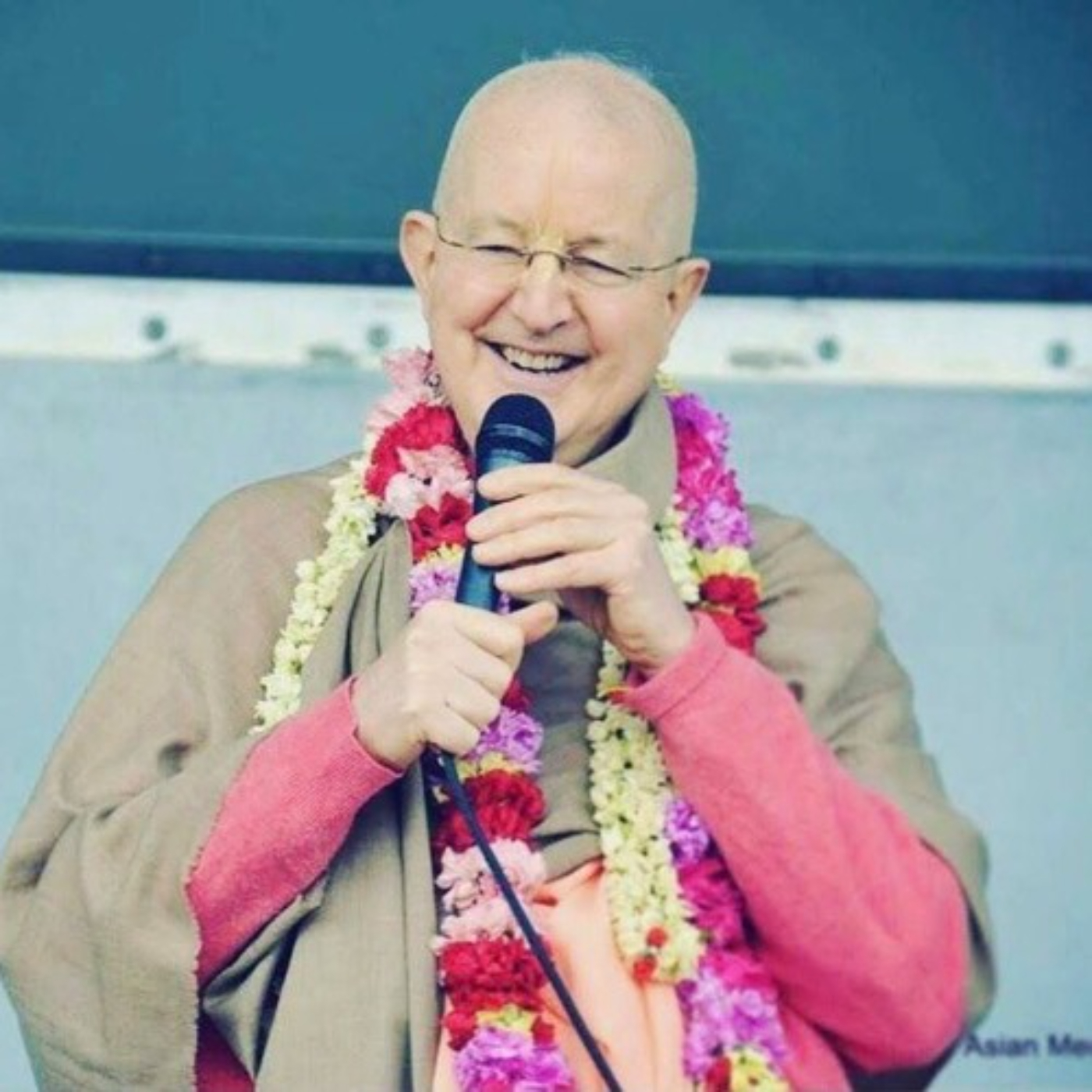
From Sound to Spirit: Healing Through Music with Dana Leong
Dana Leong is a composer, technologist and two-time Grammy-winning electric cellist, channeling ancient elegance into futuristic soundscapes. Dana is the artist reshaping music’s role in wellness, innovation and global connection.


About The Episode
Join us on The Founder Spirit podcast with Dana Leong as we uncover how this two-time Grammy-winning musician blurs genres, experiments with AI, and crafts soundscapes that heal, inspire, and connect us all.
From a child prodigy to a global innovator, Dana reveals the secrets behind creating music that touches the heart and heals the soul. Imagine a life where music is more than sound—it's a tool for resilience, a bridge across cultures, and a catalyst for social change.
Discover how early musical experimentation set Dana on a path of relentless innovation, the surprising science behind music’s healing power, and why the future of creativity may lie at the intersection of art and AI, as he also unpacks his unique approach to time management.
Just how did a child prodigy turn mastery into a career that spans music genres, continents, and social impact projects?
Biography
Dana Leong is a composer, technologist and two-time Grammy-winning electric cellist, channeling ancient elegance into futuristic soundscapes. Leong is the artist reshaping music’s role in wellness, innovation and global connection.
A two-time Grammy Award-winning musician, composer and producer, Leong has redefined what it means to be a 21st-century artist. Renowned as one of the world’s leading electric cellists, and celebrated by world class artists as a top trombonist, his work bridges the worlds of jazz, classical, hip-hop, electronic dance and meditative healing music. His performances are unforgettable immersive journeys that combine art and science, emotion and data, soul and circuitry.
Raised in the San Francisco Bay Area by his mother, acclaimed pianist Sumiko Nagasawa, Dana began performing at a young age and became a Stanford University jazz instructor at 16, the youngest in the program’s history. His musical curiosity led him to the Harvard Kennedy School of Government, where he completed public-policy studies that now inform his approach to cultural diplomacy and social innovation.
As the founder of TEKTONIKmusic.org, he uses sound and neuroscience to help communities heal from trauma. TEKTONIK continues to collaborate with artists across more than a dozen countries and has been featured at the United Nations, TEDxShanghai, and the World Economic Forum, where he was named a Young Global Leader. Dana has composed for global brands such as Hermès, Virgin Galactic and Porsche, and performed alongside icons including Kanye West, DJ Qbert, and 16 Time Grammy Winner Paquito D’Rivera.
With his pioneering project TEKTONIK NEUROsymphony, he merges live performance with AI and real-time brain-wave data to create music that evolves with human emotion. As the host of #UpgradeMe with Dana Leong, he explores the inner journeys of global leaders, revealing how creativity, resilience and purpose shape extraordinary lives.
From Davos to Tokyo, Dana Leong embodies the evolution of sound and spirit, a modern polymath whose work transforms not only what we hear, but how we feel.
Episode Transcript
[00:03] Jennifer Wu: Hi everyone, thanks for listening to The Founder Spirit podcast. I'm your host, Jennifer Wu. In this podcast series, I interview exceptional individuals from all over the world with the Founder Spirit, ranging from social entrepreneurs, tech founders, to philanthropists, elite athletes and more. Together, we'll uncover not only how they managed to succeed in facing multiple challenges, but also who they are as people and their human story.
Our podcasts are shared freely with the public, and your generosity is highly appreciated as we decided to do away with corporate sponsorships a few years ago. Please consider supporting us on Patreon so we can continue creating meaningful episodes with inspiring guests - that is P-A-T-R-E-O-N.com/TheFounderSpirit.
As always, you can find us on Apple, Amazon and Spotify, as well as social media and our website at TheFounderSpirit.com.
“What I feel personally is that music reminds us of the impermanence of life and our mortality.”
“We are all slowly disappearing and that no matter how beautiful the memory is, they are fleeting moments and they are disappearing. And there's something incredibly emotional about that.”
My inspiration comes from remembering that our time is limited and that we have effectively one chance to make the most of it.”
Joining us today is the multi-disciplinary Dana Leong, a composer, producer, US Ambassador of music, technologist, philanthropist, social entrepreneur, and two-time Grammy-winning musician. Channeling ancient elegance into futuristic soundscapes, Dana is the artist reshaping music's role in wellness, innovation and global connection.
Renowned as a leading electric cellist and celebrated as a top trombonist, his work bridges the worlds of jazz, classical, hip-hop, electronic dance and meditative healing music. Dana Leong embodies the evolution of sound and spirit, a modern polymath whose work transforms not only what we hear, but how we feel.
Just how did a child prodigy turn mastery into a career that spans music genres, continents, and social impact projects? Well, let’s talk to him & find out.
Hello Dana, welcome & thank you for joining us today on The Founder Spirit podcast!
[02:54] Dana Leong: You bet. Thanks for having me Jennifer.
[02:56] Jennifer: Dana, raised by a very talented musician, singer, celebrity mother in her own right, you grew up in the Bay Area. I was wondering, in addition to music, what were some of the key influences on your life?
[03:10] Dana: Wow. So naturally with having a mother who had a former TV career in Japan, as soon as I was born, basically there was no negotiations. It was, I know this and you're about to know it too.
And so I would say definitely very early on in my formative years, all the way up through college, music was an everyday affair. Whether I liked it or not, it was a constant presence and constant challenge and a constant inspiration.
It wasn't until after I got into college that I really started to think more about what actually inspired me to be the person I am or what inspired me to make the music that reflected my life experiences.
And I think that moving to New York was a huge part of that. When I started to see the melting pot of cultures in New York, and I started to see people who had really, including myself, who had made big sacrifices in their lives to go there, and they were really living these kind of fantastic stories.
And I started to draw from all of those life experiences, the peaks and valleys, as I would say, and that became a lot of the music that I create.
[04:13] Jennifer: You know, when you talk about different cultures and you are a person of mixed Japanese and Chinese lineage, so as a child growing up in the Bay Area, which is also a melting pot of different cultures and languages, how do you think culture impacted your upbringing?
[04:29] Dana: You know, from my mother's side, she was born in Japan, so we would speak Japanese in the house quite often. And I even went to a few years of Japanese school, albeit I wasn't the greatest student.
But from our Chinese side, it's not very well-known, but my grandmother actually went over to San Francisco about 100 years ago at this point. And so her experiencing the difficulties and the tail end of the racial turmoils that were happening after the Chinese had built the railroads in the West Coast, she became very protective and conservative when she was raising her three children. And my father was the eldest of the three.
And what that entailed was that she sent them to Catholic school, she told them they shouldn't speak Chinese, and she never taught them a single word of Chinese. So, unfortunately, I didn't learn any Chinese until I started to visit China and then opened our Tektonik Music office in Shanghai in 2015.
So I definitely had a late start with language and culture on the Chinese side, but it's been one of the most fantastic and wonderful experiences of my entire life to have been based on the Asia side of the planet for the last 10 years.
[05:39] Jennifer: Dana, I don't think you started anything too late, by the way. (chuckles)
[05:46] Dana: Thank you, thank you. That's very kind. (chuckles) Lifelong learners.
[05:50] Jennifer: That's right, that’s right. And I understand that when you were a baby, your mom used to give piano lessons while you were lying on her lap.
[05:58] Dana: Yeah, you found some quite interesting information. I don't know how much of that is very widely available. But you're right, absolutely, she was practicing and even doing some performances while pregnant with both my elder brother Eric and myself.
And then as soon as I was born, I think she said when I was one, she would allow me to touch the piano. And I clearly enjoyed it a lot - it just made me ecstatic. And by the time I was three is when I started formal lessons.
And I think I was the very first kind of guinea pig for my mother's pedagogy methodology, because now she's able to teach kids that are about that same age on a public scale.
And it's quite remarkable to see kids that age, you know, where they barely can speak, and some of them don't speak at all or read or write for sure, but they're able to play a musical instrument and communicate through music, and it's really quite wondrous and fantastic.
[06:47] Jennifer: As a small child, you possessed the perfect pitch, according to your violin teacher. And do you think, is three-years old too young to pick up any instrument?
[06:59] Dana: I think that the drums and the piano are great instruments for very young and small children to start with. Now, if you were to say you wanted to start with the double bass or, you know, a tuba or something like that, and of course, it'd be far too early.
But because you can play the piano with very small hands, and the drums are more about bigger muscles - they're not so much about small motor skills. And both of them are percussive instruments, so they kind of synchronize with our natural biorhythms and how we learn to crawl and walk and stomp and dance and play the drum.
[07:33] Jennifer: That makes sense. You're a multi-instrumentalist. I would like to know, how and why did you end up choosing the electric cello and the trombone?
[07:43] Dana: Wow. So, you know, my mother, actually, with the help of Santa Claus each year, would always include a musical instrument under the Christmas tree.
And when I was three, I started the piano, like I mentioned. And then when I was about five, I started the violin. And my brother's three years older than me, so he was already playing. And then a year after we started strings, miraculously, you know, Santa Claus brought brass instruments the next year, and my brother got a trumpet, and I got a trombone.
And then it was about a year after that my mom had this kind of architectural, strategic shift in the roadmap. And she said, you know, if you guys grow up to be musicians and you both play the violin, it'll be competitive not only between the two of you, but the world will always compare you. And so what if we switched Dana to play the cello, and then you guys can play together instead of against one another.
And actually, it was one of the smartest things that she ever did for both of us, because we both ended up becoming professional musicians and were able to play together. You know, we've done numerous concerts and recordings and all sorts of projects together.
And I think I got the tougher end of the stick early on because I had to lug around these bigger instruments while I was a smaller kid. But then in the long run, I think that I actually benefited more because the instruments that I play are a little bit more rare.
Even to this day, we haven't really seen in Asia a very popular crossover musician that works with the cello, but we've seen countless numbers of violinists and woodwind instruments or singers and whatnot.
So I kind of really lucked out on that. And I don't know if any of us really had that in mind, but it just aligned that way, and I've been very fortunate.
[09:28] Jennifer: And I was wondering why the electric cello, in particular? Is it because the normal cello is already dominated by another Asian male, perhaps?
[09:38] Dana: That is certainly undeniable, right? I think you're referring to Yo-Yo Ma and his legacy, which is irreplaceable. But actually, I've always been somebody that's been curious about experimentation.
I think it was in grade school I got my first computer, and the first thing I wanted to do is figure out if you could make music with it, and could you compose music. And I found out you could.
I had one of those old Macintosh computers, and you could click the notes in and it would play back whatever you had, sort of click composed. And then the first thing I wanted to know is, well, how many notes can it play? Because I can only play one note on the cello, I can play 10 notes on the piano with all my fingers.
How many notes can this thing play? And I would click as many notes as possible. And then I said, well, what if I turn the tempo all the way up? Like, how fast can it play and how slow can it play?
So my close friends kind of gave me a nickname of somebody who just, like, clicks all the buttons and all the dropdown menus, and that's me. I'm Mr. Click Everything. And we've made a whole…
[10:31] Jennifer: You're that kid.
[10:32] Dana: I'm that kid, right? We click until things break, and we click until we find out what the limits are. And, you know, I'm going through life just leaving no click unturned. It's really awesome.
So I did that with the computer. And later, I got a tape recorder, and I also had a camcorder. And so I was like, okay, well, if I loop them together, then I could make layered recordings.
And so I remember I connected the camcorder to the tape machine and the tape machine even to the answering machine, because I needed a second tape. And, you know, I was just Frankensteining all this stuff together.
But when I got to college, I realized there (were) these electric instruments, and you could plug those into guitar effects, pedals and computers, and there was a whole world of music and sound synthesis. So I was super curious about that.
I've also been somebody that's very cognizant of practicality. You know, as a college kid, I had no money. And our first tours, going around the country and going around the world, we had to pinch every penny.
So when I realized that an electric cello could fit in the overhead of a standard airplane, that would save me about $300 on every flight. And that was huge because some of those first concerts weren't even paying $300.
So I was like, oh, if I do this, we're onto something - we may come home with some money here. Necessity is the mother of invention, right?
The electric cello itself is able to play louder in general, you could also make the comparison that a lot of people make between the acoustic guitar and the electric guitar. Because the electric cello essentially will make no sound. I mean, I've got one back here, right? And if I pluck on the strings, you could barely hear anything.
It's the model from Yamaha is actually called the silent cello. They originally designed this to be played in Japan in small apartments with paper thin walls. And you could listen in headphones and you could practice and you could hear the accurately reproduced sound of a cello, but all through headphones.
And then guys like me came along, they said, hey, that headphone jack is the same size as the plug that goes into the guitar amp. And so what if we plug that in? Like, how hard is that gonna rock?
[12:41] Jennifer: Love it, love it. From age 10, I believe you studied at Stanford and also at the San Francisco Conservatory of Music before you went to the Manhattan School of Music. I was wondering, what were your teenage years like? I mean, I think it suffices to say that you were never a normal kid.
[12:58] Dana: I think, you know, in my mind, my life was always enjoyable and I strived for things that were interesting to me. And I think my parents instilled in me the desire and the standard to achieve extraordinary excellence.
However, I don't know exactly what you would call a normal kid, but I did play outside and I did sports in school. I got really into track and field and weightlifting when I was in high school, and I was very competitive with both of those.
I was also very much into the mechanics of how cars work. And I took my first car apart to the bones and put it back together and did all sorts of modifications and took it out on the weekends to the illegal drag races in San Jose. And so I had a full social and exciting life as a teenager.
I think that what was really important is that my mom really drilled regiment into me very early on. And so it was music lessons with her almost daily until we almost lost our minds.
I think I was about seven when my brother and I staged a coup and said, hey, you know, this can't be good for everybody. Like, you look like you're about to have a heart attack every other day, and we're black and blue with bruises and tears coming out of our eyes every day.
And we want to continue in a way that we foster love and appreciation for music. So maybe we could try a different model where we go to a different teacher and you could still step in here and there and supervise practice. Maybe not every day, like right now, but we could reshift the overall schedule of this and see if we both survive a little more and thrive a little more.
So I was lucky that by the time I was seven, I went to a different cello teacher and I studied a little bit with a different piano teacher as well. So by the time I was in middle school and high school, my mom kind of really took her foot off the gas pedal and her hands off the reins and said, hey, you know, you've shown a propensity and a talent for music, and I hope you enjoy it, it's up to you.
I think that you can take this a whole lot further, but it's really up to you from now on. I'll, of course, support you in every way I can in terms of making instruments available and music lessons as we can afford them, and plugging you into classes wherever we can. But ultimately, it's you that's going to drive this.
So I took a little more leeway when I got into high school, and I think she was okay with that. And I was certainly having a lot of fun. Yeah, so I guess I was somewhat of a normal kid.
[15:28] Jennifer: In the early days, did you ever think about quitting music and doing something else entirely?
[15:34] Dana: Oh, I used to always cry and hide in the bathroom for hours at a time because in my early years, my mother was my teacher and I was always trying to negotiate with her.
I have no differentiation between what we call music lessons and what we call practice. And they're three hours a day and they're brutal. So, of course there were many tearful moments where I felt like giving it up. In hindsight, I don't know what I would have done otherwise.
But I will tell you, there was one time when I was a few years out of college where I was really kind of hitting an existential moment and asking myself, what is the point of all this? What if my life doesn't get any better?
Like, I'm kind of just running from thing to thing in New York and doing my best to climb the ladder in the rat race. I don't know if any more people are starting to know who I am. I don't really know if I'm growing as a musician or growing my bottom line.It's tough.
And I thought, you know, maybe I should just quit and I should just go somewhere where I'm happy in life and just live with the land. And I felt like Hawaii was always a happy place for me. And I thought, you know what? Yeah, why don't I do that? Why don't I just abandon ship here?
And it was like one of those knee jerk moments because I was packing a bag with all my essentials, and right when I got to the door, I was had my hand on the knob and I thought to myself, wait, if I get to Hawaii and I can't instantly get a bartender job or a beach cabana, pool boy job, or whatever I can get, how am I going to make money for the first few days or first few weeks.
I was like, I'll bring a trombone. And I pulled the trombone out of my storage closet, and I was like, all right, I'm ready. And then I opened the door and I was like, wait. If my knee jerk reaction in terms of how I can grow myself and build is to play music, then I may as well just stay here, and keep on growing and keep on grinding. And that's what I did.
[17:34] Jennifer: Well, we're all very happy that you did. (chuckles)
Dana, at age 16, you taught the Stanford Summer Jazz Workshop, and you became the youngest professor in the program's history, and most of your students were older than you. And then you studied at the Manhattan School of Music.
Everybody must have known you're like this child prodigy that was already teaching Stanford Summer Jazz Workshop. People must have thought, okay, what could I possibly teach this guy about music.
And so I was wondering, what did you learn there?
[18:09] Dana: Wow. I certainly learned negotiation early on. You're right, by the time I had entered college, my life was a little bit unusual in that I had already been so fortunate to have already started a professional music career while I was in San Francisco.
And I really have to give credit to our professor and our private teacher, Mr. Fred Barry, who was at Stanford long before I was born and all the way through the time I was past college. And essentially, Fred Barry was the director of the jazz program and the jazz ensemble, and he was also my brother's first trumpet teacher.
And so Fred was extremely generous and progressive because not only did he teach at Stanford, he was also what's called a contractor who is in charge of hiring musicians and making sure that everybody adheres to the standards set forth by the musicians union.
So he was the guy whenever a kind of A-list artist would come through California, and they needed backup musicians, they would ask Fred to curate the ensembles.
So by the time my brother was old enough to drive at 16, I was just rounding the corner of 12-13, our teacher Fred would say to my brother, hey, why don't you come and play violin in the orchestra? You can back up Whitney Houston or Barry White or Bjork. It was Ray Charles - there was a long lineage of these amazing Earth, Wind and Fire, all these great legacy, wonderful acts that were coming through San Francisco and playing iconic venues and arenas.
And he's like, why don't you bring your little brother, too? And he can play the cello. So, I was getting these opportunities to play on these legendary stage orchestra shows before I was even a teenager. And so by the time I was able to drive myself, Fred was hiring me as well.
When we played with Barry White in Earth, Wind and Fire, and I saw the reactions that the crowds and the energy and just the amount of emotion that it was moving people. And I thought, I want to do that with my music. And I want to figure out a way that the music I love can be all in a very unique recipe.
So you're right. By the time I got to New York, I was still kind of holding onto my position in San Francisco, and I was flying back pretty often. And like I said, what I learned early on was the art of negotiation.
Because our school had mentioned that you could not take more than, I think, 15 days off per semester when each semester was 3.5 months. Otherwise you would have to forfeit the semester and start again.
However, there was a loophole, right? Me thumbing through the fine print and, you know, clicking through everything I could click through. I realized that there was an unlimited number of sick days.
So here I was, on tour with Barry White, on tour with Whitney Houston, on tour with Bjork, on tour with all the… all the greats, calling in - I'm still sick. I won't be able to come to Music History 101 today again, but I'll be back. As soon as I'm ready, I'll be back. And my classmate will pull the assignments and I'll make sure I keep up and I'll check in tomorrow.
You know, just off on the stage, having a blast, learning so much. And I took care of the classes, I did the work. I showed up for the finals and I did what had to be done. So, yeah, I would say negotiation was one of the first things I learned.
[21:24] Jennifer: And Dana, your music has such a wide spectrum and a global fusion of genres, from classical to jazz to pop to hip hop to R&B, electronic, world music. And now you're getting into meditation music. And I think your project, your early project, Milk and Jade, exemplifies that.
And I was wondering, early in your career, was it difficult for you to kind of find your own music style? I know you're the kid that likes to overlay things on top of each other, but was it difficult to chart your own path and find the style that you have today?
[21:59] Dana: I think I would say before 25, I had a very different approach to music and to my regimen and work ethic.
And it was easy to create because I think we had that youthful exuberance, that ignorant bravado, where it's like, yes, I am the best. And so anything I create is the greatest, right? And watch this. And so in those early years, I would mainly create from a place of inspiration, which was often.
But what I realized later on past 25, I think, was when I saw an interview with Eminem, the rapper, and a bunch of artists who have worked together with him, and they all noted that he works precisely to the minute, 9am to 5pm every day.
And the way that people had described it, you know, Lloyd Banks, 50 Cent, Akon, all these guys, there (were) two things that they mentioned. They were like, one, he always wanted us to come to Detroit. And it's like there was no other reason for us to go to Detroit other than to go with Eminem in his studio in Detroit. So we would do that, we would appease that. I mean, he's, after all, one of the greatest of all time.
And two, he insisted they work 9am until 5pm and not a minute less, not a minute more. And he would always show up absolutely on time, 9 o'clock, ready to roll. And they would work on some creativity, they would work on some songs.
And precisely at 12 noon, he would stand up, no matter what was going on, and he'd walk out of the room and guys would be like, where are you going? To lunch - I'll be back an hour. One o'clock on the dot, he's back, he's in the seat. All right, let's keep going. They work, work, work.
And 5pm, no matter what's going on, he's like, all right, see you guys. And all of the greats that worked with him had the same reaction. Wait, we're in the middle of this great song and we're so inspired, and like, what next? He's like, what next? I'll see you tomorrow. He's like, well, when are we going to finish this? 9am tomorrow.
And I realized there's a saying in fitness that time under tension is what matters. So it's not about how much you lift or how many times you lift it's how much time you put your muscles under tension.
And so that consistency of putting your mind and your nose to the grinding stone and working those hours and that consistency brings you much further on the longer arc than working at 11pm, I've got this idea, I've got to run to the studio and put it down right now. It may make for a couple good things, but over the course of a career, you're looking at far fewer, far smaller output.
So I was lucky that I had my own studio in New York City right after I graduated from college. And so I had access to it all the time. And of course, the first couple years, we were so excited, we were there seven days a week, almost 10 hours, 12 hours a day.
But after that initial kind of buzz sort of wore off, I realized, yeah, you know what? I think that's smart. I should actually just put in regular hours, just like anybody else and get there in the morning, take a lunch, work until it's time to stop, and then I can actually live a normal life as well. And I can hang out with friends and I can kind of clear my mind.
So that's been sort of my regiment for quite a few years now. And I've found that it does smooth out the bumps of the artist’s journey. There's so much self doubt and there's so much question.
I also work on the Pomodoro method, right, where every hour you take a small break and then you go back in and you work. So what it helps you do is to, when you compartmentalize these bits of blocks of work, you really recognize, one, how much you can get done in a short amount of time, how efficient you can be if you just focus. And two, you recognize more quickly how many of those building blocks it will take to complete a project.
And for me, this is prior to AI, what I recognized is it took me a minimum of 40 hours. And this is about average, I think, I don't think I'm particularly fast or particularly slow. I know producers and musicians who are on both ends of that 40 hours. But for me, it's 40 hours of composing almost to the T where I'm melding and molding this putty and clay proverbially with music.
And in that 40th hour I'm like, yeah, this actually sounds like what I envisioned, it would sound like… And I would stop doubting, like, oh, this is such a piece of crap or it's never going to get done. Or this is nothing like what I envisioned. Like, why am I so terrible and why am I unable to do, like, you know, what I thought I could do? Like, I'm certainly not as good as I think. So all those things get thrown out the window and you trust the process.
[26:40] Jennifer: Interesting. Do you think that’s the way that most musicians work though? I mean, maybe classical musicians, but rock and roll bands, I'm really surprised, first of all, to hear that about Eminem. That's incredible.
But is that how most musicians work, like in a rock band?
[26:57] Dana: When I see anybody that's worth their weight, that's hitting global stages and working on a regular, consistent basis in the public eye, whether they're just starting their mid-career, their superstar level, it's the same. It's exactly the same. We've only got 24 hours a day and we've only got, give or take, 100 years on the planet.
So I think that people have sort of figured it out. We can look back through history - when you Google things like the Pomodoro method or time management, you can see how prior presidents of nations had spent their days.
You see how scientists, Renaissance men like Leonardo da Vinci or Johann Sebastian Bach, but essentially they also worked in these kinds of blocks and they were very efficient with their time, focused.
[27:44] Jennifer: That's great to know.
[27:45] Dana: Yeah. These days, yeah, I'll meet like YouTubers, I'll meet athletes, I'll meet actors. It's all the same.
[27:50] Jennifer: Interesting. You had described in an interview the sound of Milk and Jade as liquid lyricism on rock hard rhythm. (chuckles) What is your process to blend all these different music genres together in one coherent sound identity?
[28:12] Dana: So when we were doing Milk and Jade, it was a four-piece band. I was playing the cello and the trombone and singing. And then there was a MC, Core Rhythm, who was rapping. And then there's a keyboardist, childhood friend of mine who also was at Stanford as a kid, Adam Platt, who's a keyboard wizard, and a drummer named Aviv Cohen from Israel - fantastic musician.
So we would spend time together on a regular basis to rehearse what we already knew and also just to exercise in creativity. You know, let's improvise something. Let's go in this kind of direction.
And I do see a lot of bands work this way as well, where they will improvise something and then someone will say, okay, why don't we keep that section and let's develop that a little bit more.
And of course, I was constantly coming up with ideas that I wanted to hash out further. Like I said, we were lucky that we had the studio there in Harlem so we could get those guys in almost any time and just continue building these blocks and pieces and putting together new songs.
I have always looked at music the same way I look at the culinary arts. I love to cook and I love to eat. And when I find an ingredient that I love, whether it's music, a sound, an instrument, a harmony, whatever it is, I make note of that.
I'm like, okay, how can I use that ingredient somewhere along that matches with some kind of narrative that fit within the story I want to tell? And somehow over time, you find that connection and they fit. But it is all about ingredients and storytelling.
[29:40] Jennifer: Dana, you also collaborated with so many incredible artists. You know, Ray Charles, Barry White, Wynton Marsalis, Yoko Ono. What do you look for in a creative partner? Whether they're a musician, a dancer, or a technologist, what do you look for?
[29:59] Dana: I would say that I'm also looking at how that artist fits in as an ingredient, whether it's an ensemble, or it's a part of the music. As somebody who's a Pisces, I'm very in tune with people's energy and what inspires them, what makes them happy and what they are conveying to the world as well.
And honestly, like I said, it's like an ingredient comes back to that ingredient mix again, where I say, wow, this person is really something special. How can we fit that ingredient into what we do?
Like, for example, when we did our first summer Davos appearance, I brought a young lady named Yumi Kurosawa that plays the Japanese koto or the Chinese Guzheng.
[30:41] Jennifer: Guzheng, yeah.
[30:42] Dana: And she plays in a very modern way, but she's very classically trained. For those who haven't seen the ways it's studied, it’s very much like a martial art where you even have belts, like you're like a white belt and then you're a blue belt and then you're an orange.
So she was trained through the classical schools of going through the ranks. And eventually she thought, yeah, this isn't the way I want to live my life. I'm glad I had a regimented, organized methodology to learn the instrument. Now I want to play some other stuff.
And so when I noticed that she had moved to New York and she was playing all sorts of very interesting songs that had not been explored, I thought, yeah, I need to find a way that we can create something.
And the same thing happened when I met Val Ink, who's a Haitian sound artist and DJ. I was in the Biennale de Venezia in Venice, Italy, and I wandered through the festival into a warehouse, and there (were) about 5,000 people that were freestyle dancing to this beautiful Haitian woman playing all sorts of electronic instruments and the turntables.
And I thought, wow, this is pretty cool - people are just, like free flowing. And then at certain points, she would take out the music very elegantly and start going to soundscapes like, rain and wind and synthesizer sounds and more like sound effects, almost like a cinematic feeling and completely uncoordinated, there was no verbal communication or visual communication.
But just like magic, 5,000 people laid on the ground in the warehouse and just absorbed this soundscape. And I thought, I have got to figure out how to work with this woman.It's almost like a musical love at first sight.
We ended up having a long multi-year, multi-decade collaboration on so many different projects, including most of the Tektonik Music projects and many others. We've been all over the world and I'm still fascinated with that energy and that she brings. And, you know, like I said, it's just, you recognize there's something special about the energy that is (an) undeniable ingredient that you just can't pass up on it.
[32:47] Jennifer: Dana, in 2011, you won two Latin Grammys for your collaboration with Paquito D’Rivera, a Cuban American saxophonist, clarinetist, and composer for the Pan American Sweet album.
And for Paquito, who was, I think, twice your age, this is perhaps the peak of his music career. But for you were in your early 30s and granted, you already had almost a three decade long music career already, but you still have many more years ahead of you. Did you ever wonder, were you like, have I peaked? Now what do I do?
Because you were, I think you were 31 or something like that at the time. In your early 30s, right?
[33:29] Dana: Yeah, I was in my very early 30s. It's a great question. I think that at the time, it was a culmination of so many years (of) work and so many dots connecting when I went back to explain to my mother after we won the awards how that all took place.
In fact, I actually did a whole podcast about this recently, about what it takes to win a Grammy from the actual logistics side of it and how you get nominated and how voting works and all the processes of that.
So besides the mechanics of that, I explained to her sort of the social web, which I also talked about in the podcast, where folks I met from Stanford also moved to New York around the same time as I did.
There was a drummer named Daphnis Prieto, a saxophonist named Jos Van E. Terri. And I don't know what it was like, just the stars aligning, but not only were they some of the most phenomenal musicians I ever saw to date, but they were very team player oriented.
Whenever there was an opportunity, they said, hey, come on over, we're gonna meet XYZ person. And that person knows this person. And, you know, the circle goes all the way around to Paquito d'Rivera himself.
So I explained that kind of whole web of things and how happenstance and how almost seemingly impossible it could have been for me to be in all of those places throughout all of those years to culminate in being able to fill in for Yo-Yo Ma in Paquito D’Rivera and Yo-Yo Ma's Abregado Brazil project and then later on take a spot after they decided to part ways and continue their own solo careers. I had basically started as almost like an understudy and then eventually had a solid chair in the trio with Paquito D’Rivera.
And you're right, when I turned 30, he said, hey, I'd like to invite you to the Manchester Craftsman's Guild in Pittsburgh, Pennsylvania to record an album. And there's going to be all these wonderful folks from North and South America and Central America, and we're going to do xyz.
And I went home from the rehearsal and I thought to myself, I was like, wow, I think Paquito D’Rivera just invited me to win a Grammy Award. Because the way that it works, I mean, there's a lot of bureaucracy, there's a lot of politics, there's a lot of name recognition in the voting process. And that's all what it is. Some of it's good, some of it's bad, some of it's just the ugly and what it is.
But when you look at his track record, I mean, at that point, he had already won 13-14 Grammys, and the prior two were live albums that were recorded in that concert hall with that production team, with that record label. So all of those names are recognizable names on the Grammy ballots.
And I thought, yeah, if I show up on the next Grammy ballot with this cast of names, the probability of us winning is so high, as long as we make a great album, right? And of course, he added the extra icing on top of the pressure cake to do a live album in front of a live audience. And I'm like, okay, yeah, no pressure at all. Right, let's do it live in front of thousands of people over the course of two days.
But like I said, it all culminated in that kind of fantastic moment. Again, I don't count really the nominations, but if I had to, I think we had already been nominated three times before that fourth nomination to win with Paquito.
So actually, by the time that fourth nomination rolled around, we actually decided, you know what, we're not going to get dressed up and get in our tuxedos, fly ourselves to Los Angeles, sit in the audience, go through the whole thing - the red carpet.
As exciting as that is, that's an opportunity cost for a musician. And so what we're going to do instead is what we do best. We're going to continue to go out and do our concerts and tour and keep life moving.
And we were on stage at the Chicago Symphony hall when somebody came on stage in between two songs and just whispered out, hey, you just won two Grammy Awards. And we're like, hey, everybody, we just won two Grammy Awards. Like, let's celebrate. Let's play some music. Let's have a ball. So, like I said, that was an amazing time.
And for the short period after that, a lot of glitz and glamour and a lot of extra press, and the demand for your presence goes up, the fees that you are commanding, everything is going great.
And I don't feel like I had a peak moment. Clearly, I had a decision to make, though. If I were to continue to live in somewhat of a musical marriage with Paquito D’Rivera, then I would always have that opportunity to continue winning under his legacy and his umbrella as his musical support. But that wouldn't necessarily help me build a career for myself. And it would be contingent on whether or not he decided or wanted to continue to work.
And luckily he's a stalwart in the industry. He's a total workhorse. He's a workaholic. He loves it more than anything, so he'll never stop. I saw him, we played together in UC Berkeley two seasons ago, and he's in his late 70s and he's still going full steam ahead. Wonderful guy. Love him to death.
But at a certain point I realized, well, I need to go on that path of starting my own projects in terms of putting those… our names in the ballot hats and making those name recognition things happen. And also just building what I feel is the most fulfilling recipe for my musical career.
So there were a couple years where I felt a little bit stagnant in New York after that. And I think it was around 2013, 2014, we closed our first music management agency and I lived in Hawaii for a summer. And I was just refocusing on my priorities. I really honed it down to very basic things.
One was swimming in the ocean, the second one was practicing and making music. And the third was facing my fears, which I combined partially with swimming in the open water.
And oddly enough, since I was a child, I've always had some strange fear and aversion of walking barefoot in the grass because I just don't know what's in there and what could potentially go through the bottom of my feet and take over my body.
[39:31] Jennifer: Parasites, you never know.
[39:32] Dana: Or glass or, you know, dog pee or whatever it might be.
But I did that nonstop for three months while I was out in Hawaii. And I grew and I regrounded and I went back to New York and I realized, you know what? Okay, it's time that I start exploring the world. And so that's how I hit some pivotal moments.
That's also during that point. I'd also started Tektonik Music in 2011 as a response to the natural disasters that had struck my mother's home region. So that was a project that was very close to my heart. I didn't know how it would grow, but I was working on that. I was starting to just take longer stints of time to explore other parts of the world.
As a child, I always had premonitions of how my life would go. And oddly, those premonitions were eerily accurate all the way until 2020. Like I almost knew like clockwork what would happen in my life, that I would grow up, I would go to Stanford and I would move to New York and make a mark there.
And then after I felt comfortable and satisfied, I might move to Asia and explore my roots and see how my mother did things in Asia and see if I could make my mark there.
And at a certain point, maybe my first teacher, Fred Barry, would retire from Stanford and I could kind of go into third gear and jump on in, take on the music department at Stanford and have the most posh job in the most beautiful campus in the world. And that would be my life.
But the craziest part was that Fred retired in 2019. And I got the call from the department and the steering committees and I went through seven rounds of interviews online and phone calls, and they said, yeah, this is great. You're obviously familiar with the campus and familiar with the program. You have some great new ideas that can really kind of help foster a new era of creativity for the university and institution.
Why don't you come, let's say you come at the end of March in 2020, just for a mandatory campus tour, just so we can have you meet the steering committee. You can meet some of the key students that are part of the student body organizations.
And it all fell apart. It all fell apart from that moment on, like it just totally fell apart. The wheels fell off and the whole wagon and kitten caboodle just exploded and eviscerated and thin air. I was like, wow, my premonitions are no more.
[41:52] Jennifer: Covid blew it apart. All your manifestations about the future.
[41:59] Dana: Decimated, decimated, yeah. It's been such an interesting…
[42:01] Jennifer: How did that feel?
[42:02] Dana: It was heart shattering. It blew the doors off of everything I believed in and everything I loved.
I'm now starting to hear more stories from close friends about how they all had very trying times as well. But at the moment, I felt like the world had imploded and just kind of sucked me in and me alone.
Because in 2020, in January, I left my house thinking I would leave for two to three weeks tops. I went to the World Economic Forum's Davos - we had a wonderful time there and a performance.
And then I went to Japan to help a close family friend who was retiring and building the most extravagant, beautiful man cave retirement music space in the mountains of Japan. And it was a four-year project - we went in very early with him as he was breaking ground.
In the final two weeks of a four-year project, I was to supervise a ten-man team to just build it out and make sure that the instruments and the soundproofing and all the final touches to this beautiful space were all done to spec.
And it was that moment while I was there on that trip that Covid just exploded. When I got to Japan they said, oh, we're going into a state of emergency, which means we suggest people take it easy, don't go out at night, and restaurants should close earlier.
And at the same time, China issued a 12-hour warning at midnight, saying if you are not within the four walls of China by noon tomorrow, then you are officially out. And we don't know when we'll open the border, but hopefully it's not that long.
So I said, you know what? How long could this virus thing possibly last? Three weeks? I mean, if it really gets bad, are we talking about three months? I can survive in the mountains by myself for three months in this beautiful space.
And lo and behold, I ended up living in the mountains of Japan, completely isolated for almost two years. And meanwhile, my girlfriend/partner, whom I had a home together with, and my staff in Shanghai, like, they all basically forgot about me. And that was tough.
It's a period of time where I learned more than I've ever learned. It's a period of time that I've hardened. And I recognized that strength is not my number one priority. I realized that resilience was my number one valued quality in friends and family and partners. And that resilience is what keeps you coming back to the plate.
You can be the strongest person in the world that can perform any challenge, can make decisions under pressure, can climb all the ladders. But if you are not resilient, the time when you break is the end.
And I saw that firsthand with my own relationships personally with people who were very close to me. And there was nothing I could do about it, except continue to live by example and keep myself vigilant and ready for the moment that I was able to leave and go back and assimilate into society.
[45:16] Jennifer: (chuckles) So you basically did the Vipassana retreat for almost two years?
[42:21] Dana: Yeah, I did. The first few months, I spoke to so many people on Zoom, and I was part of all sorts of online fiascos and activities. But then I realized our bodies are like batteries. You may have been running ragged from place to place, you may have been overusing the device.
And what I recognized after a few months of socializing on Zoom is that I needed to take every waking moment to maximize what I could do in sunlight, daylight, whether it was chopping wood or going to the local refinery to get oil to heat the house, or it was gathering food or studying or whatever it was.
I think that peeled away another layer and brought a whole other sense of regiment to my life. But it was a very dark time as well, in a very movie-esque kind of cinematic time as well.
People often refer to it like the Island. Was it Leonardo DiCaprio or Tom Hanks when he was with Wilson the volleyball on the stranded or when he lived in the airport? All those things basically happened. Yeah, Cast away. All those things basically happened to me.
But what I recognized is people were reaching out and saying, hey, let's have a call. I hope you're doing okay up there. It's unusual for a person to spend that much time alone. Even people who were clinical psychologists were like, yeah, it's three weeks to three months is the max for any human. You're probably not going to come out the same if you don't try to keep a social regimen of some sort.
But in my mind, I was like, you know what? Your Zoom call is not going to help me clean this. The place I was living in was enormous. It was an old, hollowed out warehouse. I was like, I've got to keep this place clean. The elements are constantly changing. You know, it's snowing, it's raining.
I've got to chop the wood, I've got to get the food. The Zoom call doesn't add any value to my survival. I just need to bear down and do the things that make me better as a person and the things that help me survive and get through this. And that's it.
[47:21] Jennifer: That's super interesting, I guess we don't talk about it anymore. It's already been five years on, but it's always interesting to compare and contrast how people lived through Covid.
For me, for example, I was very close to a burnout six months before. And so in many ways, I had the best time of my life during COVID - I missed that time where I didn't travel, I stayed at home, the kids stayed at home.
For me, it was a beautiful time that I could be with my family. We came together as a unit - we said our gratitude at every meal every day.
And if I think about my burnout six months before, it was very dark. So sometimes I think when you look back, your darkest moments is actually your gift, because you transform because of it.
I don't know if I could live in the mountains for two years. You're like literally a guru after that, I think. Dana, did you hear any voices when you were in…? (chuckles)
[48:24] Dana: Good question. I mean, it was a little bit like being Batman, because Japan is kind of mysterious like that.
I was in Nagano, which is under two hours from Tokyo on the high speed train, but it is incredibly remote. But I had fiber optic Internet. So here I am perched on top of a mountain, able to see every piece of news from every corner of the world, and yet I'm not…
Because of the restrictions set in place, my one prerogative was to get back home to China, like Tom Hanks in the Terminal and he was living in the airport and he just wanted to go home, but there wasn't the opening yet.
So I had promised myself and my partner the very first opportunity to go home, I will be home. And we have to keep that as our primary source of faith, that we are committed to one another and we're committed to reuniting. And it won’t be forever.
And somehow we had that all work out. And I made it back into China on Christmas Eve of 2021. And I had about two months of wonderful life reuniting with friends and colleagues, at which point people who had these early access visas to China brought back the first cases of COVID to China.
I had a grand birthday party on the Bund, saw all my friends, had a great time, and then, two days later, they're like, oh, by the way, we're closing the whole country. Everybody's going to be locked at military control, police control. You've got 18 hours to buy whatever rations you need and then prepare to be home for at least a week.
That week turned into almost six months where it was worse than any of the prior lockdowns. And that whole thing was very meticulously covered by CNN and BBC and all the major news platforms. It was the first time in my life where I could watch TV and look out the window and be like, yeah, that checks out.
[50:14] Jennifer: Dana, in 2014, you became the first musician to bring hip hop to Summer Davos meeting in China. You invited DJ Qbert to join you on stage in performing and giving interactive demonstrations on the history of hip hop to show the methods of musical collaboration as examples for world leaders to follow.
So tell me, and especially today, what can world leaders learn from musicians in terms of working together?
[50:44] Dana: So there's a couple things, ground rules that I've observed that are kind of universal. They work great in creative relationships, they work great in business relationships, and they work great in personal relationships as well.
One is what I call playground rules. When you step your first day into school, usually around kindergarten or preschool, typically you'll make friends based on who you like. And it's a very altruistic, direct way of relating to people. It's very innocent, it's very pure.
And I think that musicians often times embrace that purity and that kind of immaturity and playfulness as well, where they say, you know what? That's a great person to hang out with - very funny. Because I just love the artistry and the way they make music, I want to work with that person.
And so choosing based off of those things, not so much off of what opportunity it's going to get you, or what you're trying to leverage, always in the end, takes you further and fosters a much longer, sustainable collaboration.
And that brings me to the second ground rule, which is when you look at some of the most successful mainstay artistic relationships, they're almost like these lifelong marriages.
You look at the Rolling Stones, they're older than time, older than dirt, older than sand, yet they still want to be together, to tour and play their music and have a ball. And that is so beautiful. So I think that's a great example for how leaders of industries can look to create authentic relationships that are long-lasting.
The other thing that ties into the longevity part of relationships is something that Wynton Marsalis told us during our training before we became music ambassadors for the United States State Department of Cultural Affairs.
Someone asked him, what tips can you give us for enduring longer tours and being together and relating to one another? And he said, well, what I can tell you from my years of experience touring is that in order to be a great band, you have to function like a family. But at the end of the day, you need to realize there's a hard line in the sand, that you are not family.
And so all that stuff that you bring to your mom, your cousin, your brother, whoever, your wife, your husband, don't bring that stuff to your bandmates. Like draw the line, censor yourself, grow up and behave, otherwise you're really gonna have a train wreck. So remember that guideline.
So I think that's also key, right? Don't bring the drama into the workplace, don't bring the childish games into the workplace.
[53:19] Jennifer: There's definitely some of that going around these days. Yeah, absolutely. Oh, I love that. I really love that. Leave your drama at home. There's a lot of unnecessary drama that's being created.
[53:35] Dana: Sure.
[53:36] Jennifer: You had mentioned that in 2011, which is the same year when you won the Grammy Awards, you had launched Tektonik Music as a response to your family back in Japan being affected by the tsunami, the earthquake and the nuclear catastrophe that ensued.
Tektonik Music is an artist collective from around the world and using music to raise awareness, fund global harmony, and help to heal some of the trauma that people have experienced in natural disasters and trauma-stricken areas.
And you had been also a US Ambassador of Music, as you had mentioned, named by the State Department. How do you see music and art as a vehicle to catalyze some of the social change that is badly needed today?
[54:23] Dana: I think from the beginning of time, every significant moment in life has had a sound or a song. That's an age-old question that I've continued to ask and explore for the answer.
For example, the moment you're born, you got a happy birthday song; the moment you graduate, you've got a graduation song. There's a funeral march by Mendelssohn, right? Duh duh duh duh duh duh… And what is it about these songs and sounds that makes them so significant?
I don't think we're coming to the table reinventing the wheel here or taking on some grand new, enlightening process, but we are modernizing the ritual of it, in that what I've come to recognize over time is that one of the most significant things you could ever do for another human on this earth is to give them an unforgettable experience.
Whether it's Taylor Swift or it's Michael Jackson or whatever your cup of tea is, that kind of ritualistic giving of memory is irreplaceable in terms of the magic of it. And so that's what we're looking to do.
When we set out to start Tektonik Music, it was more about healing trauma, as you mentioned, raising funds and keeping awareness alive for regions of the world that were stricken by disaster.
Because disaster strikes in a moment, but the effects are felt for long periods of time. If you use Tohoku in Japan, my mother's region, as just an example, within a moment you had 400,000 people displaced, 100,000 people deceased, 200,000 people missing. And the region itself was not going to be repaired within a month or two or one news cycle.
Yet the news moves on - they need to talk about whatever else is hitting headlines. So we realized, well, how can we support these folks who are continuing to need our support and help both monetarily, but also just from a mood enhancement and trauma release perspective, how can we continue to support them for 10 years if need be?
And so that's where we started and now we've been going for 14 years. We've switched our model because we realized we are not first responders. That's the reason why we started in our musical realm to collaborate with artists to remediate negative impacts and trauma felt in disaster zones. But we started to feel like first responders.
So now what we're looking at is creating music for mood enhancement. So what that entails for us now is that we work with institutions like Stanford Neuroscience, we work with technology companies like Emotiv that makes a portable brain scanner and we create music that is fully designed to help you relax, remediate stress, trauma, help you sleep.
Our latest album, Sweet Sleep Meditations by Tektonik Music is now in the process of Grammy nomination for 2026. But we worked with engineers from Lucasfilms and the good folks at Stanford Neuroscience to fine tune an album that is great to help you sleep.
Because for many years we've known that music, in general, helps people to lift their mood and to graduate from stressful and traumatic experiences. But it wasn't until now that we have the tools to actually measure the impact and be able to communicate across sectors, to find funding and find support and find outlets to create public programs for accessibility of this music.
And I find that's another lateral pivot that enables me to open up another lifelong journey and commitment and devotion to this practice of healing and mood-enhancing music.
[58:06] Jennifer: So I have two comments on that.
One, I was attending a side event and there was an indigenous person, he got up and he sang. He sang for two minutes, and I was crying. I just could not stop the tears from coming down my face - and it was that powerful. Then also I sing at a community choir, this is really weird, but sometimes when I sing, I can feel my heart opening up and I start crying.
And so because you've been studying this, like, what gives music the ability to heal? Is it because it's tuned to the heart frequency? And also, Priscilla told me that during one of your corporate wellness presentations during COVID, the music that you created made her cry.
I can't explain to you why I felt that way, but it was as if when this guy sang, I was like, mother Earth is very sad. And all he did was sing, in words that I didn't understand.
So what is it, Dana, what is it that gives music the ability to be so evocative, to be so emotive?
[59:15] Dana: For everyone, it's highly personal. One of the biggest discoveries we've recognized in the last 10 years, to our surprise, is that people relax when they hear the music that they like. And that could be any genre.
We did tests of subjects who all listened to a spread of different music. And the guys that said, oh, I like heavy metal, like fast, strong, loud, their brainwaves were finding a place of relaxation when they listened to that music.
And others were listening to hard festival EDM, and others were listening to more stereotypical of what you would imagine would be relaxing music, like more spa, pianos with the rain and the sounds of nature.
And it was so interesting to see how people had the same reaction to different input and stimulus. So all I can say is it is extremely personal.
From my own experience, of course, yes, we've seen many different practices around the world that say certain frequencies will resonate with different chakras or different organs in your body. Whether it's from the head, from the high frequencies, or it's the bass and the low frequency that will vibrate with organs.
We've heard that certain ceremonial songs have various purposes to cleanse your spirit or exorcise demons or whatever it might be. Obviously there's songs for celebration.
But what I feel personally is that music reminds us of the impermanence of life and our mortality. And when we realized that, as you mentioned, you said in your experience, you felt like the Earth is dying. And I can relate and resonate with that quite deeply.
I feel that the music that really has brought me to tears at moments. There's something about the moment of hearing that always brings me to a place and a reminder that we are all headed in one direction, we are all slowly disappearing and that no matter how beautiful the memory is, they are fleeting moments and they are disappearing. And there's something incredibly emotional about that.
I don't know that it's a sad thing per se, but the natural reaction to that is to purge your stress and purge your tension, and that oftentimes comes in the form of tears.
Another thing I noticed, because we've done many of our kind of communal healing music practices, as Priscilla had mentioned to you, or whether we did them for private corporations or we did them in public places around the world.
What I also noticed, and this could also have happened to you with the chant and the singing and being in close proximity with your friends and your peers and people you care about, is that we often also absorb the energy of who's around us.
One of the first times I did an open session for whoever wanted to come (to) Brooklyn, New York, it was after I had gone through a pretty significant breakup with my girlfriend of many years, and we had gone through so many peaks and valleys and her mother had passed away from cancer. And that was just such a tormenting and emotional time for both of us. And I..
True to what we announced to the public, I said, come as you are. Come to bring your pain, bring your suffering, bring your issues, your emotions, whatever it is, and come and be prepared to let them go.
And I remember that night - we have that recorded, where we started the music. And I peered out into the audience, and I saw eyes of desperation, I saw eyes of suffering, I saw eyes of question all upon us.
And I remember I played one note on the cello, the first notes of one of our pieces, and I felt a surge of all of the energy and all of the grief that was being held by this group of strangers who had all assembled in this place to let go. And it all went through me at once.
And I started to cry uncontrollably, and my body felt like it weighed a thousand pounds. I couldn't lift either of my arms, and I just sat with my arms to my side and my cello blocking my body, and I cried uncontrollably for what felt like an eternity. I think it may have been a minute or two, but, you know, it was long enough that the other musicians had noticed that I wasn't playing.
And finally, it was with every ounce of energy in my body, I was able to lift my arms and continue to play. But I felt the energy of almost like a congregation, all of our folks who were in the room there lifting and channeling out and being removed from that space.
So, like I said, it's highly personal, but there is something about it that is tied to the purging and also the impermanence and also the removal of that tension.
[01:04:45] Jennifer: Yeah, I think part of it is because music brings joy and happiness, so you leave your blockages at the door.
I wanted to ask you because you started to experiment music composition very early with AI, very early on in your career, way before the advent of ChatGPT as we know it.
[01:05:06] Dana: The Dark Ages, the dark ages of five years ago.
[01:05:08] Jennifer: Exactly. So in your view, what is the future of music and AI?
I mean, there are musicians or artists who are really worried about having copyright issues, having AI create similar music. So people don't know what's really real and what's not real anymore.
But you're obviously you’re (a) pioneer in this subject. So what is the future of the intersectionality of music and AI, in your opinion?
[01:05:36] Dana: I would be lying to you if I told you that I knew what the directions and of the tides of the entire industry or the art forms were going in. I myself, watching day by day and watching it unfold as we've hit an inflection point much sooner than I ever expected.
When I first experienced, like, the early generative music platforms, I thought that we had at least another year or two before we could hit musical AGI or the equivalent of a computer creating faster, more tasteful, better executed, whatever it might be, music than a human.
However, those days have come much quicker, about two years faster than I ever could have predicted. So I'm right on the front lines, just testing things and watching. But what I can say is I've never been somebody who has depended on the traditional path or traditional industry.
I think because of my inquisitive nature and my experimental nature, I always try to find ways that I uniquely stand out or bring something to the table and try to maximize upon what my strengths are.
It's very easy as a creative person to be scattered and chase the feathers blowing in the wind. And rather instead, what is it that I can look at, that, of course, will change dynamically as new technologies arise, but ultimately keep me on a devoted path and a consistent progression of improving myself and creating something that I feel is true to the narrative that I want to express.
[01:07:22] Jennifer: Wow, that's very deep. Dana. I really…
[01:07:25] Dana: Yeah, it's tough, it’s tough.
[01:07:27] Jennifer: I don't know. I'm speechless. It's a tough one to follow up. I love it, though. I love it.
[01:07:33] Dana: Yeah, yeah.
But I recognize that I'm somebody that loves technology. I've loved it my whole life. I am not afraid of change. So I embrace the newness. And I love cross-disciplinary collaboration as well.
I'll look at dancers, I'll look at developers and visual artists and technology pioneers and I think, wow, how could that all work together to create something that we've never seen or heard before? And how can that be distilled into the ultimate, unforgettable, emotional, immersive, experiential, music-driven moment for people?
And it comes back to that pinpoint every time, like, oh, that's really cool. I really like that ingredient. How can I present that in a way that's going to move people in an unforgettable way?
[01:08:23] Jennifer: That's beautiful. Thank you so much.
Before we move into the rapid fire questions, I just want to mention that you started a podcast series called Upgrade Me with Dana Leong where he explores the inner journeys of global leaders, revealing how creativity, resilience and purpose shape extraordinary lives.
So definitely tune in to these life hacks that Dana is uncovering from his guests and we'll include the links in the show notes. We have just a few rapid fire questions and you can respond in a few words.
Your favorite musician, dead or alive.
[01:08:59] Dana: Keith Jarrett (American pianist and composer). Yeah, he's always been a favorite of mine from very early.
[01:09:03] Jennifer: Wow, surprising. Is there a music genre that always appealed to you?
[01:09:07] Dana: I think that because I started classical music, that's been with me the longest, there's a certain energy about music that I love.
But I guess if I had to say something that has always appealed to me, then I would have to go back to the very root of it and say that there are certain masterpieces from the classical idiom that always move me.
[01:09:24] Jennifer: And where does your inspiration come from?
[01:09:26] Dana: My inspiration comes from remembering that our time is limited and that we have effectively one chance to make the most of it.
It is that famous saying, nobody's coming to save you. Nobody's coming to do it for you. It's up to you.
[01:09:47] Jennifer: And what would you like to explore the most in the coming years?
[01:09:50] Dana: I think I've been a non-conformist for a long time, and as I've gotten older, I realized that we've only got a certain amount of years and that systematic things happen in the world for a reason.
So for that reason, I would have to say that I would like to have a family because I can always come back to work, but I can't always be as energetic and present for a family as I can at this moment.
[01:10:14] Jennifer: For all the single ladies out there - absolutely. (chuckles)
Does music have a soul?
[01:10:21] Dana: Yes. I think it's very much attached to its composer and also its performer, but absolutely.
[01:10:27] Jennifer: A favorite culinary ingredient at the moment?
[01:10:32] Dana: Mmm. Being In Taiwan. I would say that the clams are particularly good.
[01:10:37] Jennifer: Oh, interesting. Your favorite travel destination,
[01:10:41] Dana: The deep blue sea. I've always loved aquamarine waters, and in recent years I've got my scuba license and I've been going into the depths of the ocean and seeing that there's a whole other universe down there.
[01:10:54] Jennifer: Absolutely, you and Sylvia Earle. If you could describe your future self in one word, what would it be? Caring. Thank you.
We're now coming to the end of our interview, and as you know, we end every episode with a quote. And for this episode, we have a quote from Plato, an ancient Greek philosopher,
“Music gives a soul to the universe, wings to the mind,
flight to the imagination, and life to everything.”
Thank you, Dana, for taking the time to join us on the podcast today. And I wish you all the best in continuing to create music and soundscapes that transcends borders, genres and expectations, while connecting people everywhere with the universal language of love. Thank you very much.
[01:11:38] Dana: Thank you, Jennifer and friends, looking forward to many more.
[01:11:41] Jennifer: Thank you.
Our podcasts are shared freely with the public, and your generosity is highly appreciated as we decided to do away with corporate sponsorships a few years ago. Please consider supporting us on Patreon so we can continue creating meaningful episodes with inspiring guests - that is P-A-T-R-E-O-N.com/TheFounderSpirit.
As always, you can find us on Apple, Amazon and Spotify, as well as social media and our website at TheFounderSpirit.com.
[01:12:16] END OF AUDIO
Show Notes
Takeaways:
- Embracing Impermanence as a Catalyst for Musical Creativity
- Resilience Over Strength in Overcoming Adversity
- The Ingredient Mentality in Artistic Collaboration
- Strategic Discipline Outperforms Spontaneous Inspiration
- Music’s Unique Capacity to Facilitate Deep Healing
Personal Links:
- Website: https://danaleong.com/about/
- Wikipedia: https://en.wikipedia.org/wiki/Dana_Leong
Organization & Social Media Links:
- LinkedIn: https://www.linkedin.com/in/danaleong/
- Instagram: https://www.instagram.com/danaleongmusic/
- YouTube: https://www.youtube.com/@danaleongmusic
Media:
- Dana Leong Music - Spotify: https://open.spotify.com/artist/14ak3HFc2NQkCwYZX7FxYP?si=5sIvBPwJT2SB5fLn5L8D4g
- Podcast: Upgrade Me with Dana Leong -